
Step-by-Step Guide to Applying for an H-1B Visa (2026 Edition)
If you're planning to work in the United States, the H‑1B visa could be your best opportunity. However, the process can feel confusing with terms like lottery selection, petition filing, and approvals.


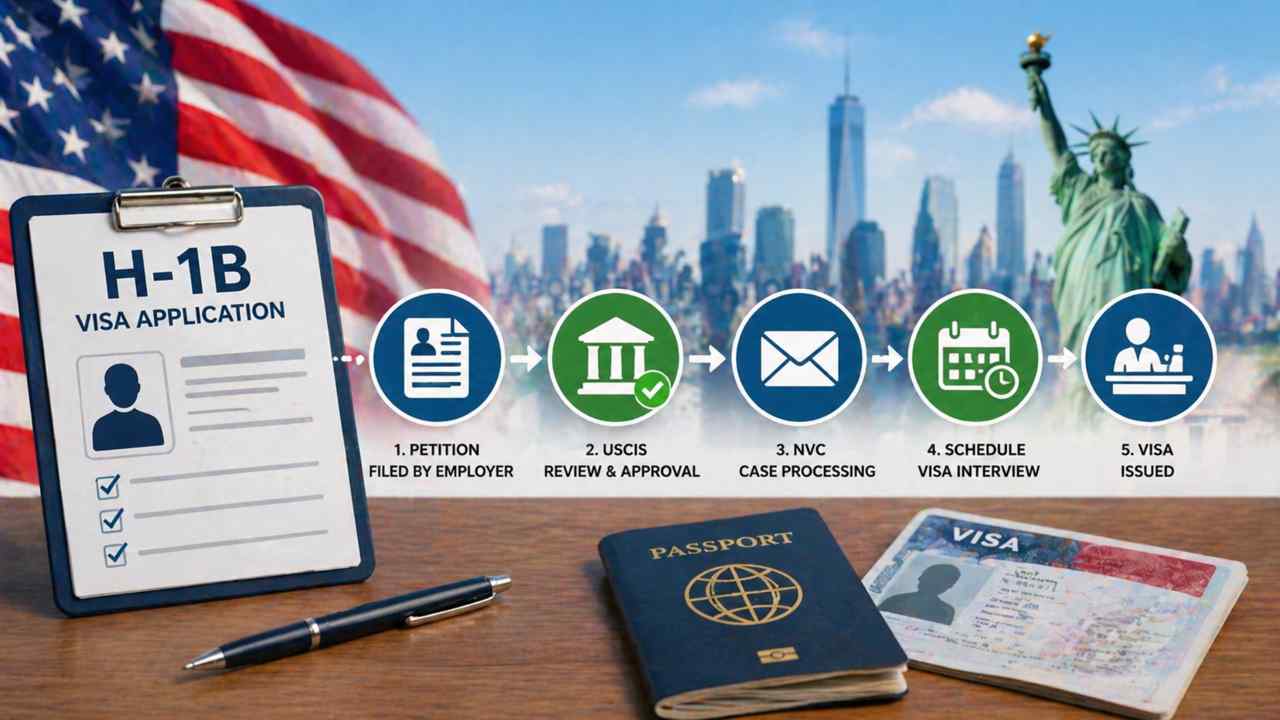
The United States remains one of the most sought-after destinations for skilled professionals from around the world — especially in fields like technology, healthcare, finance, and engineering. For many, the H1-B visa is the first step toward building a long-term career and life in the U.S.
Each year, thousands of international workers apply for the H1-B visa through employer sponsorship. However, the process can be complex, time-sensitive, and competitive due to strict eligibility criteria, lottery-based selection, and detailed documentation requirements.
In this guide, you'll find everything you need to know about applying for an H1-B visa in 2026 — from eligibility rules and key dates to the full application process, required documents, and tips for improving your chances. Whether you're applying for the first time or helping someone else through the process, this step-by-step resource is built to help you succeed.
What Is the H1-B Visa?
The H1-B visa is a non-immigrant visa that allows U.S. employers to temporarily hire foreign workers in specialty occupations. These jobs typically require a bachelor's degree or higher in fields like technology, engineering, finance, medicine, architecture, and more.
The H1-B is valid for up to 3 years, with the option to extend to 6 years. Many H1-B holders later transition to a green card (permanent residency) through employment-based sponsorship.
There is a limited number of H1-B visas available each year, making the process competitive and time-sensitive. The H1-B cap for FY 2025 remains at 65,000 regular visas, with an additional 20,000 reserved for U.S. master’s degree holders.
Who Is Eligible for an H1-B Visa?
To qualify for an H1-B visa in 2025, you must meet specific eligibility criteria as an employee and have a U.S. employer willing to sponsor you.
Basic Requirements:
A job offer from a U.S. employer in a specialty occupation
A bachelor’s degree or equivalent (in a field related to the job)
The employer must file an H1-B petition with USCIS on your behalf
The position must require specialized knowledge or skills
Specialty Occupations Examples:
Software Engineer
Data Analyst
Civil Engineer
Financial Analyst
Registered Nurse
Architect
Business Systems Analyst
Additional Notes:
You cannot self-apply for an H1-B visa.
Your degree must match the job duties — for example, an IT degree for a software role.
Employers must also meet Labor Condition Application (LCA) requirements to ensure they’re paying fair wages.
H1-B Visa Process Overview (2025 Edition)
The H1-B application process follows a strict timeline each fiscal year. For FY 2025, it begins in March 2025 with the online registration and ends with visa issuance for those selected and approved.
Here’s how the process works, step by step:
Step 1: Employer Registers for H1-B Lottery
In March 2025, the U.S. employer must create an online account on the USCIS portal and submit a basic registration for each candidate.
There’s a non-refundable $10 registration fee per applicant.
Registration typically stays open for 2–3 weeks.
Step 2: Lottery Selection
If the number of registrations exceeds the annual cap, USCIS holds a random selection (lottery).
Selection notices are sent by late March or early April.
Step 3: File Labor Condition Application (LCA)
If selected, the employer must file a Labor Condition Application (Form ETA 9035) with the U.S. Department of Labor (DOL).
The LCA ensures that the employer will pay prevailing wages and treat the foreign worker fairly.
Step 4: Submit H1-B Petition (Form I-129)
After LCA approval, the employer files Form I-129 with USCIS along with supporting documents.
This petition must be submitted within 90 days after lottery results are announced.
Step 5: USCIS Processing & Decision
USCIS may approve, deny, or issue an RFE (Request for Evidence).
Processing options:
Regular Processing: 2 to 6+ months
Premium Processing: 15 calendar days (extra fee)
Step 6: Visa Stamping (If Outside U.S.)
Once approved, candidates outside the U.S. must schedule a visa interview at a U.S. consulate to get their H1-B visa stamped.
Step 7: Employment Begins
H1-B employment typically starts on October 1, 2025, the beginning of the U.S. government fiscal year.
Required Documents for H1-B Visa Application
To avoid delays or rejections, both the employer and employee must submit a complete set of documents during the petition stage. Here's what’s typically required:
From the Employee:
Valid passport (should be valid for at least 6 months beyond intended stay)
Resume/CV
Educational degrees (Bachelor’s or higher) + transcripts
Work experience letters from previous employers
Professional licenses (if applicable)
Passport-size photographs (as per U.S. visa photo requirements)
From the Employer:
Job offer letter outlining role, salary, and duties
Detailed job description and responsibilities
LCA approval notice
Company details: tax ID, address, financial reports, etc.
Signed Form I-129 and H Classification Supplement
Bonus Tip:
Translations: Any non-English documents must be translated and certified.
Duplicates: Keep one full copy of the petition for personal reference.
What Is the H1-B Lottery?
Due to the limited number of H1-B visas issued each year, most applicants must go through a random lottery selection before they can apply. The H1-B lottery is held once annually, typically in March, and it determines which candidates can proceed with the full visa petition process.
How Many Visas Are Available?
65,000 regular H1-B visas are available under the standard cap.
An additional 20,000 visas are reserved for applicants with a U.S. master’s degree or higher — this is called the advanced degree exemption.
If more registrations are submitted than available slots (which almost always happens), USCIS conducts a computerized lottery to randomly select registrants.
How the 2025 H1-B Lottery Works:
March 2025: Employers submit online registrations via the USCIS system during a 2–3 week window.
Late March: USCIS runs the lottery and selects registrations.
April–June: Selected applicants are notified and must file their full petitions (Form I‑129).
If not selected, applicants must wait until the next fiscal year (unless the cap is reopened later in the year, which is rare).
U.S. Master's Degree Advantage
Applicants with a U.S. advanced degree are entered into two rounds:
First into the 20,000 “master’s cap” pool.
If not selected there, they get a second chance in the 65,000 regular cap.
This increases the odds of selection for U.S.-educated professionals.
Key Tip:
Being selected in the lottery does not mean your visa is approved — it just gives your employer the chance to file the H1-B petition. Approval depends on documentation, eligibility, and USCIS review.
How Long Does It Take to Get an H1-B Visa?
The H1-B process can take several months from start to finish — and even longer if there are delays, backlogs, or requests for additional evidence. Your timeline depends on when your registration is selected, how quickly your employer files the petition, and which processing option they choose.
General Timeline for H1-B 2025:
Step | Approximate Timing |
Online Registration | March 2025 |
Lottery Results | Late March |
LCA Processing (DOL) | 7–10 business days |
Form I-129 Filing | April to June |
USCIS Processing | 15 days (premium) or 2–6 months (regular) |
Visa Stamping (if abroad) | 2–4 weeks after approval |
Start Working | October 1, 2025 (earliest allowed) |
Regular vs Premium Processing
Option Global BriefingGet the week's most critical immigration news and policy analysis directly in your inbox. | Time | Cost (USD) | Includes |
Regular Processing | ~2 to 6 months | Standard USCIS fees | May include delays, no guaranteed timeframe |
Premium Processing | 15 calendar days | $2,805 extra | Faster decision (approval, denial, or RFE) |
Premium processing can be requested by the employer by filing Form I-907.
USCIS may pause premium processing temporarily for some categories, so check current availability before filing.
RFE = More Time
If USCIS issues a Request for Evidence (RFE) — which is common — it will delay the process. Employers must respond within a set deadline (usually 30–90 days), after which USCIS will make a final decision.
Pro Tip:
To avoid unnecessary delays, ensure that all forms, supporting documents, and signatures are complete and accurate before submitting the H1-B petition.
What Happens After Your H1-B Is Approved?
Once USCIS approves your H1-B petition, you’re almost ready to start working in the U.S. — but there are still a few final steps depending on where you are located when the approval comes through.
If You’re Already in the U.S. (Change of Status)
If you’re in the U.S. on another visa (like F-1, OPT, or H-4), and your employer requested a change of status as part of the H1-B petition:
You don’t need to leave the U.S. or visit an embassy.
Your H1-B status becomes active automatically on October 1, 2025.
You must maintain your current legal status (e.g., F-1) until Sept 30, 2025.
After Oct 1, you can begin working under H1-B authorization.
✅ Tip: If you're on OPT and your H1-B is approved with a start date of Oct 1, you may qualify for the Cap-Gap Extension — which allows you to keep working between your OPT end date and Oct 1.
If You’re Outside the U.S. (Visa Stamping Required)
If you’re applying from outside the U.S., you’ll need to complete visa stamping before entering the country.
Here’s what to do:
Receive your I‑797 Approval Notice (from your employer)
Complete the DS‑160 visa application online
Book a visa interview at a U.S. embassy or consulate
Bring all required documents (passport, I‑797, LCA, job offer letter, DS-160 confirmation, etc.)
After a successful interview, your H1-B visa will be stamped in your passport
Once your visa is stamped, you can travel to the U.S. up to 10 days before your employment start date (usually around Sept 20 for Oct 1 roles).
Port of Entry (POE) – What to Expect
When you arrive in the U.S., a Customs and Border Protection (CBP) officer will:
Review your documents (visa, I‑797, job details)
Confirm your start date and employer info
Stamp your passport and issue your I‑94 record
Tip: After arrival, always check your I‑94 record online to ensure your status and expiration date are correct.
Common H1-B Visa Mistakes to Avoid
The H1-B visa process involves strict documentation, deadlines, and eligibility checks. Even small errors can lead to delays, denials, or being disqualified from the lottery. Here are the most frequent mistakes — and how to avoid them:
1. Missing the Lottery Registration Window
Each year, USCIS opens a limited-time online registration period — typically for 14 to 21 days in March. If your employer misses this window, you won’t be entered into the lottery and must wait an entire year to reapply.
Tip: Start preparing in January or February so your employer is ready to register as soon as it opens.
2. Incorrect or Incomplete Job Role Classification
The job offered must clearly match a specialty occupation. If the role doesn’t align with the degree, or the job description is too vague, USCIS may issue a Request for Evidence (RFE) or deny the petition.
Tip: Make sure the job title, duties, and required qualifications are consistent across all submitted documents.
3. Filing Before LCA Approval
Your employer must obtain an approved Labor Condition Application (LCA) from the Department of Labor before filing Form I‑129. Submitting the petition without an approved LCA will result in a rejection.
Tip: File the LCA immediately after lottery selection, as it takes 7–10 days to process.
4. Missing Documents or Signatures
One of the most common reasons for denial is submitting petitions with incomplete documentation or unsigned forms.
Tip: Double-check that every form is signed, all pages are included, and that supporting materials are properly organized and translated (if needed).
5. Using Fraudulent Degrees or Employers
Any sign of fake documents, suspicious employers, or mismatched credentials can lead to visa denial, blacklisting, or even legal consequences.
Tip: Always work with a legitimate sponsor and submit real, verifiable documents. If you're unsure, consider legal consultation.
Frequently Asked Questions About the H1-B Visa
Here are answers to some of the most commonly asked questions by H1-B applicants and employers:
Q1: When does the H1-B registration open for 2025?
The online registration for FY 2025 is expected to open in early March 2025 and will remain open for about 2–3 weeks. Official dates are announced by USCIS in February.
Q2: Can I apply for an H1-B visa without a job offer?
No. You cannot self-petition for an H1-B visa. A U.S. employer must file the petition on your behalf after offering you a qualifying job in a specialty occupation.
Q3: What if I'm not selected in the lottery?
If you're not selected, you’ll receive a notification of non-selection, and your employer cannot file a petition for that fiscal year. You can try again the next year or explore alternatives like the O-1, L-1, or TN visa (if eligible).
Q4: Is premium processing worth it?
Yes — if you're facing tight timelines or want faster decisions, premium processing is a good option. It reduces wait time to 15 calendar days, though it costs an additional $2,805.
Q5: What is an RFE and how do I respond?
An RFE (Request for Evidence) is issued by USCIS when they need additional documentation to make a decision. Your employer or attorney must respond within the specified deadline (usually 30–90 days). Delays or weak responses can lead to denial.
Q6: Can my H1-B status be extended beyond 6 years?
Yes — if your employer has started the green card process before your 5th year, you may qualify for extensions beyond 6 years under AC21 provisions.
Q7: Can I change jobs on H1-B?
Yes, you can switch employers, but the new employer must file a new H1-B petition (H1-B transfer). You can begin working for the new employer as soon as USCIS receives the transfer petition (not after approval).
Final Tips and Resources
Successfully securing an H1-B visa takes preparation, timing, and attention to detail. Whether you're applying for the first time or guiding someone through the process, here are a few closing tips and official resources to help you stay ahead.
Final Tips for H1-B Success:
Start early — especially if your employer is new to the process.
Use a qualified immigration attorney for complex cases or when changing status.
Stay updated through official USCIS announcements and deadlines.
Make sure your degree matches the job listed in the petition.
Keep digital and physical copies of all forms and receipts.
🔗 Useful H1-B Visa Resources:
Resource | Link |
USCIS H1-B Official Page | |
H1-B Registration Overview | |
Labor Condition Application (LCA | |
DS-160 Form (Visa Application) | |
I-94 Arrival/Departure Record |
Stay Updated
Immigration rules can change — new policies, processing changes, or deadlines. To stay informed:
Sign up for USCIS email alerts
Follow U.S. embassy websites if you're applying abroad
Bookmark trusted immigration news sources (or follow your own site’s newsletter when live!)

