How to Find an H1B Sponsoring Employer in the U.S
Looking for an H1B sponsor in 2026? Discover top industries, real employer databases, tips to avoid scams, and how to find companies that file H1B visas regularly.


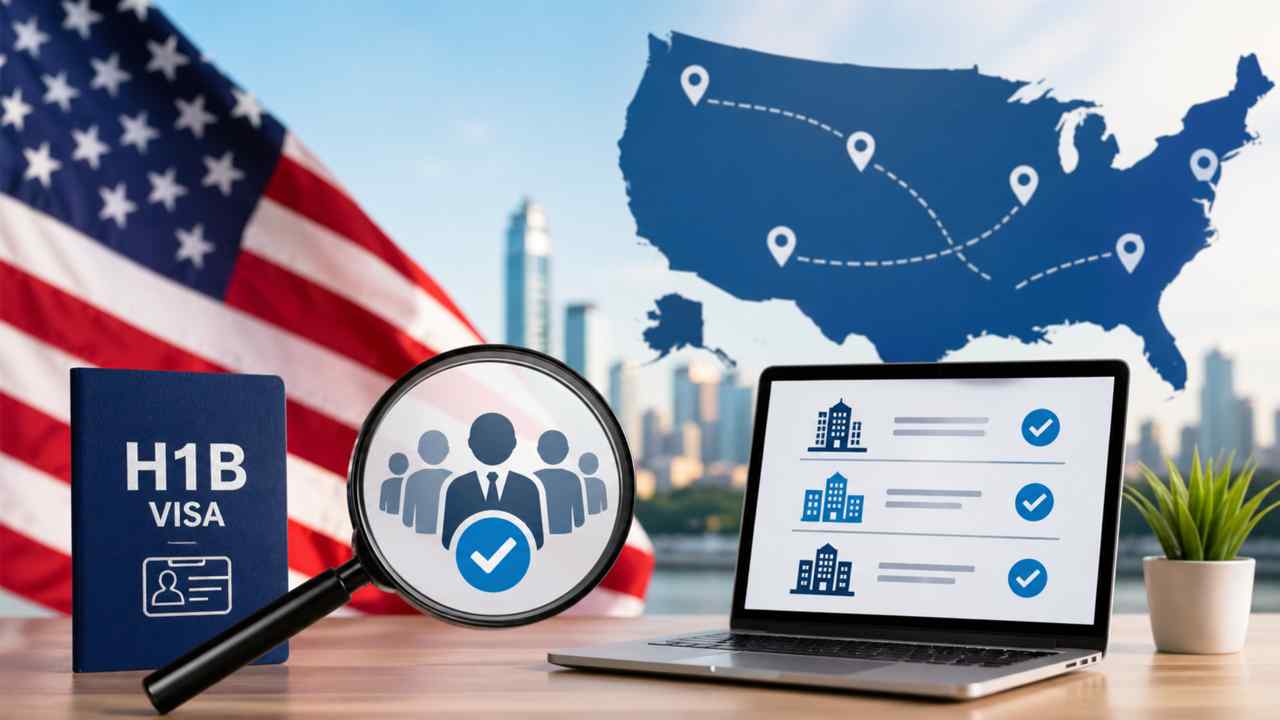
Finding a U.S. employer willing to sponsor an H1B visa is often the most challenging part of working in America as a foreign professional. This guide breaks down where to search, which companies sponsor frequently, and how to boost your chances of getting hired.
Finding a company that’s open to sponsoring H1B visas isn’t just about applying to any job — it’s about targeting the right employers who already have experience navigating U.S. immigration rules. Many international candidates waste valuable time applying to companies that simply won’t or can’t sponsor, especially in highly competitive industries.
Whether you're a student on OPT, a skilled professional overseas, or already in the U.S. on another visa, your success largely depends on knowing which employers are H1B-friendly — and how to find them.
In this guide, we’ll show you how to search for H1B sponsoring companies, which tools to use, which industries to focus on, and how to avoid scams along the way.
What Is an H1B Sponsoring Employer?
An H1B sponsoring employer is a U.S.-based company or organization that agrees to file an H1B petition (Form I-129) on your behalf to bring you in as a temporary skilled worker. This employer must show that:
Your job qualifies as a specialty occupation
You meet the required educational qualifications
They’re paying at least the prevailing wage set by the Department of Labor
Sponsoring an H1B worker is not just hiring someone — it involves legal costs, paperwork, and a willingness to navigate U.S. immigration rules. That’s why not all companies offer sponsorship, especially smaller businesses or those unfamiliar with the visa system.
Employers must also follow strict timelines if they’re subject to the H1B annual cap, which is why it’s important to know whether a company is cap-subject or cap-exempt (more on that later).
Top Industries & Job Roles That Commonly Sponsor H1B Visas
Not every job or industry is eligible for H1B sponsorship. The H1B visa is reserved for “specialty occupations”, which typically require a bachelor’s degree or higher in a specific field. That’s why most H1B sponsors are companies in industries with high skill demands.
Here are the industries that most frequently sponsor H1B workers:
Technology & IT
This is by far the largest H1B sponsoring sector
Includes companies like Google, Microsoft, Infosys, TCS, IBM
Common roles:
Software Developer
Data Analyst
Cloud Engineer
AI/ML Specialist
Finance & Banking
Major banks and fintechs often hire international professionals
Common roles:
Business Analyst
Financial Analyst
Quantitative Researcher
IT/Systems Auditor
Engineering & Manufacturing
Especially in automotive, aerospace, and mechanical fields
Roles include:
Civil Engineer
Electrical Engineer
Process Engineer
Healthcare & Life Sciences
Particularly in research roles at hospitals or labs
Common for cap-exempt H1Bs (non-profits, universities)
Roles:
Research Associate
Lab Technician (if specialized)
Medical Scientist
Academia & Education
Colleges and universities are cap-exempt, so hiring is more flexible
Common roles:
Research Assistant
Assistant Professor
Teaching Fellow
Understanding which industries are H1B-friendly helps narrow your job search and avoid applying to companies unlikely to sponsor.
How to Search for H1B Sponsoring Companies (Step-by-Step)
Finding H1B-friendly employers isn’t just about luck — it’s about using the right tools and data sources to target companies that regularly sponsor. Below is a step-by-step approach that increases your chances of landing a job with a real sponsorship opportunity.
Step 1: Use H1B Sponsor Databases
There are several free tools that let you search and filter companies that have filed H1B petitions in recent years:
🟢 H1BGrader.com – Shows sponsor rating, approval rates, job titles
🟢 MyVisaJobs.com – Has job boards, employer search, and rankings
🟢 USCIS H1B Disclosure Data – Raw filing data by employer, role, and location
💡 Pro Tip: Focus on companies with consistent H1B filings across multiple years. These employers are more likely to file again.
Step 2: Filter by Job Title or Industry
Once you find a database, search using your exact role (e.g., “Data Analyst” or “Electrical Engineer”) to discover:
Which companies sponsor your role
Locations where roles are available
Average salary and success rates
Step 3: Check Company Profiles and Approval History
Before applying, review each company’s H1B petition history:
Approval vs denial rate
How many petitions they filed last year
If they’ve been flagged for violations
This helps you avoid fake consultancies or low-success employers.
Step 4: Look at Job Boards That List H1B-Friendly Roles
Use advanced filters on platforms like:
LinkedIn – Use “H1B sponsor” as a keyword
Indeed – Look for job descriptions mentioning “visa sponsorship available”
MyVisaJobs Job Board – Has pre-filtered roles from known H1B employers.
Best Websites to Find H1B Sponsoring Jobs
Job boards are crowded, but a few platforms stand out when it comes to finding real H1B sponsor opportunities. Whether you're in the U.S. on F-1/OPT or applying from abroad, these sites can help you target companies already familiar with the sponsorship process.
1. MyVisaJobs.com
Specifically focused on international job seekers
Features a "H1B Visa Sponsors" database
Has an H1B job board with sponsor-only listings
Shows employer reviews, approval rates, and filing history
2. H1BGrader.com
Provides employer ratings based on approval rates
Shows LCA wage data, denial trends, and sponsorship history
Great for checking the legitimacy of lesser-known consulting firms
3. LinkedIn
Use filters like:
Keyword: "H1B sponsorship" or "visa sponsorship available"
Filter by U.S. location
Follow companies you’ve already identified as H1B sponsors
Reach out to recruiters directly with personalized messages
4. Indeed & Glassdoor
Use advanced search operators:
site:indeed.com "H1B visa sponsorship"
site:glassdoor.com "sponsorship available"
Some employers explicitly note whether they sponsor in the job description
5. College/University Career Centers (for F-1 Students)
Many U.S. universities offer exclusive job listings for international students
Employers in these databases are often already OPT/H1B aware
Ask your school about CPT/OPT-friendly employers lists.
How to Read H1B Employer Filing History (Using Public Data)
Before applying to any company for H1B sponsorship, it's smart to check whether they’ve actually filed H1B petitions in the past — and how successful they were. This helps you avoid time-wasting applications or falling for fraudulent job offers.
Here’s how to interpret employer filing history using free government and third-party tools: -
Global Briefing
Get the week's most critical immigration news and policy analysis directly in your inbox.
1. Use the Department of Labor’s LCA Disclosure Data
Visit: https://www.foreignlaborcert.doleta.gov/performancedata.cfm
Search by employer name, city, or job title
You'll see:
Total number of LCAs filed
Positions and salaries offered
Work locations
💡 This shows intent to hire — an LCA is filed before the H1B petition.
2. Use USCIS H1B Employer Data Hub
View past H1B approvals, denials, and withdrawal records
Compare multiple years to see consistency
Look for signs of:
High approval rates
Multiple filings annually
Sponsorship across varied roles or departments
3. What to Watch For
Metric | Good Sign | Red Flag |
Approvals | 90%+ approval rate | High denial rate |
Filing frequency | Filed every year | Filed once years ago |
Job types | Matches your skills/field | No roles matching your profile |
Company size | Mid-to-large employers sponsor more | Tiny firms with no history = risky |
Tips to Increase Your Chances of Getting Sponsored
Getting an H1B job isn’t just about being qualified — it’s also about being strategic. The more you understand how employers think, the better your chances of standing out and getting an offer that includes visa sponsorship.
1. Target Employers That Regularly Sponsor H1Bs
Focus your efforts on companies with a proven history of H1B filings
These employers are already familiar with the process and less hesitant to sponsor
Use tools like MyVisaJobs and H1BGrader to build a target list
2. Apply Early in the Hiring Season
Most cap-subject H1B employers finalize hiring between January and March
Starting your search early allows more time for:
Interviews
Offer negotiations
Timely lottery registration
3. Optimize Your Resume for “Specialty Occupation” Keywords
Include industry-specific terms from the job description (e.g., "Python," "financial modeling," "cloud architecture")
Emphasize degree-field match (e.g., Computer Science degree for software role)
This improves both your chance of selection and avoids RFE later
4. Network with International Alumni and Professionals
Connect with people who’ve already been sponsored — especially from your school, region, or industry
Ask what employers sponsored them, what helped in the interview process, etc.
Join groups like:
LinkedIn’s H1B job seeker communities
Reddit’s r/h1b and r/F1OPT
5. Focus on STEM-Related Roles
STEM occupations dominate H1B approvals
These roles also qualify for OPT STEM extensions, giving you more time to find a sponsor
Even within finance or healthcare, tech-enabled roles boost your odds.
Watch Out: Common Scams and Red Flags When Searching for H1B Sponsors
Unfortunately, the demand for H1B visas creates an opportunity for fraudsters and shady “consulting firms” to take advantage of international job seekers. Knowing what to avoid is just as important as knowing where to apply.
Here’s what to watch out for:
1. “We Guarantee H1B Sponsorship for a Fee”
Legitimate employers never ask for money to file an H1B
USCIS prohibits employees from paying petition filing fees
If someone promises a visa in exchange for payment — it’s a scam
2. Fake Job Offers or Staged Interviews
Some fraudulent firms conduct “interviews” just to collect personal data or lure you into payment
Always verify the company: Google their address, check LinkedIn employees, confirm website legitimacy
3. Unrealistic Job Descriptions
Roles that don’t require a degree or are vaguely defined (e.g., “IT Consultant”) may not qualify as specialty occupations
These lead to USCIS denials or RFEs
4. Employers Asking You to Pay for H1B Filing
It’s illegal for an employer to ask you to pay the Form I-129 fee, attorney fees, or fraud prevention fee
You can pay for optional fees (like premium processing), but not mandatory ones
5. “Body Shops” That Bench Employees Without Pay
Some H1B placement firms hire you without a real client or project
This can violate USCIS rules and lead to visa revocation or denial
If an offer feels too good to be true, it probably is. Always research the company, read reviews, and check their H1B history before engaging.
Can Cap-Exempt Employers Sponsor H1Bs Year-Round?
Yes — and this is one of the best-kept secrets for international job seekers. If you missed the H1B lottery or want to bypass it altogether, cap-exempt employers can still sponsor you at any time of the year — no lottery required.
Who Qualifies as a Cap-Exempt Employer?
These employers are not subject to the 65,000/20,000 annual cap:
Non-profit universities and colleges
Non-profit research organizations
Government research institutions
Non-profit hospital affiliates of universities
💡 Example: A research role at a university-affiliated hospital like Mayo Clinic or teaching assistant at a public university
Benefits of Cap-Exempt H1Bs
No lottery — you don’t compete for limited spots
Flexible timing — apply and begin employment any time during the year
Often fewer delays due to lower application volume and more predictable review process
Drawbacks to Consider
If you later switch to a cap-subject employer (like a tech company), you must go through the lottery process
Opportunities may be limited to academia or healthcare/research sectors
Tip: Use this path as a stepping stone — gain U.S. work experience under a cap-exempt H1B, and later transition (if needed) to a cap-subject employer through the lottery.
Conclusion
Finding an H1B sponsoring employer in the U.S. takes research, persistence, and a smart strategy. The key is to target companies that have a proven history of sponsorship, tailor your applications toward specialty occupations, and avoid the common traps many international job seekers fall into.
If you’re flexible, exploring cap-exempt employers like universities or nonprofits can give you a year-round path to an H1B visa — no lottery needed. With the right preparation, your chances of working in the U.S. legally can grow significantly.
For more help, check out our full guides on H1B Cap vs Cap-Exempt and Step-by-Step H1B Application Process (2025 Edition).