
'No School, No Work, No Shopping’ May Day Protest Sweeps Across the U.S.
Thousands across the U.S. participated in the May Day protest urging people to skip work, school, and shopping. The movement highlights immigrant contributions and growing concerns over immigration policies and worker rights.

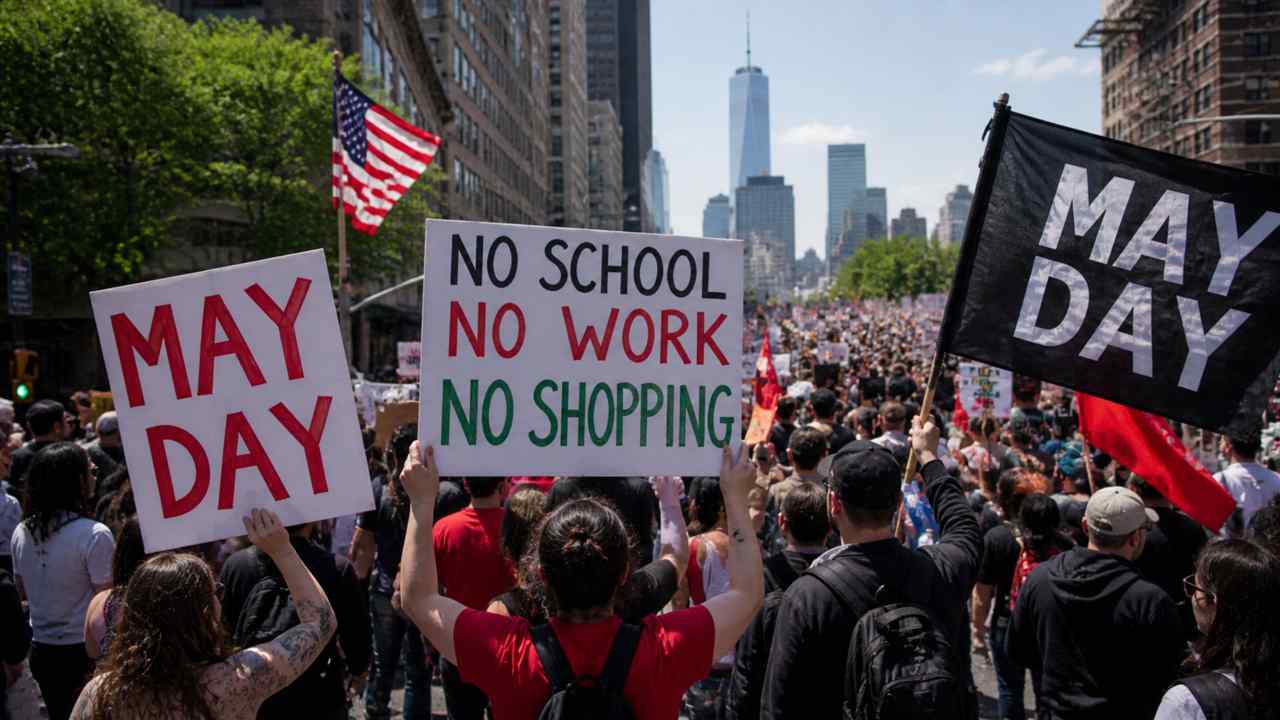
Across multiple cities in the United States, thousands of people participated in May Day demonstrations under the slogan “No School, No Work, No Shopping.” The coordinated action encouraged individuals—especially immigrants and their allies—to pause everyday activities as a form of protest against immigration enforcement policies and economic inequality.
The movement drew participation from workers, students, advocacy groups, and community organizations. Many participants stayed home from jobs, avoided shopping, and joined marches to highlight the economic contributions of immigrant communities. Organizers emphasized that the protest was designed to show how essential immigrant labor is to the functioning of the U.S. economy.
In several major cities including Los Angeles, Chicago, and New York City, large crowds gathered for peaceful rallies. Demonstrators carried signs calling for immigration reform, worker protections, and an end to policies they believe unfairly target immigrant populations.
What is the "May Day Protest"
The May Day protest is rooted in International Workers’ Day, traditionally observed on May 1. In the U.S., the event has increasingly become a platform for immigrant rights activism.
The “No Work, No School, No Shopping” message is a form of economic protest. By stepping away from daily routines, participants aim to demonstrate the collective impact of immigrant communities on businesses, schools, and local economies.
Organizers argue that immigrants play a critical role in sectors such as construction, agriculture, healthcare, and service industries. The protest seeks to make that contribution visible in a way that policymakers and the public cannot ignore.
📍 Where Protests Took Place
Demonstrations were reported in several parts of the country, with particularly strong turnout in:
Los Angeles – Large marches and community gatherings
Chicago – Organized labor groups joined protests
New York City – Rallies focused on worker rights and immigration reform
Many events remained peaceful, with participants emphasizing unity and awareness rather than disruption.
Why People Are Protesting
The demonstrations reflect ongoing concerns about U.S. immigration policies, workplace conditions, and economic inequality.
Key issues raised by protestors include:
Stricter immigration enforcement and deportation concerns
Delays in visa and green card processing
Worker rights and fair wages
Global Briefing
Get the week's most critical immigration news and policy analysis directly in your inbox.
Access to education and healthcare for immigrant families
Advocates say the protest is not just about policy, but also about recognition and dignity for immigrant communities.
Who Is Affected
While the protests are centered on immigrants, the impact reaches a broader audience:
Undocumented immigrants facing uncertainty
Visa holders dealing with long processing delays
U.S. employers relying on immigrant labor
Students and families navigating immigration challenges
The message extends beyond immigration, touching on economic and social issues that affect millions of people.
What This Means for You
If you are living in the U.S. as an immigrant or planning to move:
Stay informed about policy changes and public sentiment
Be aware of how protests and activism may influence future regulations
Understand your rights in workplace and public settings
Events like these often signal shifts in public opinion, which can eventually shape immigration policies.
What Happens Next
While a single day of protest may not bring immediate policy changes, it contributes to ongoing national conversations around immigration and labor rights.
Lawmakers, advocacy groups, and communities will continue to debate reforms. The visibility created by these demonstrations may influence future proposals related to immigration enforcement and worker protections.
Final Take
The “No School, No Work, No Shopping” May Day protest highlights the growing role of immigrant communities in shaping conversations around policy and economic contribution in the United States.
For many participants, the message is simple: immigrants are not just part of the system—they are essential to it.