
How the $250 Visa Integrity Fee Affects H-1B, Students & Tourists in 2026
The U.S. has proposed a $250 Visa Integrity Fee in new immigration reforms. See who must pay, why it’s charged, and how it affects H-1B, F-1, and B-1/B-2 visas.

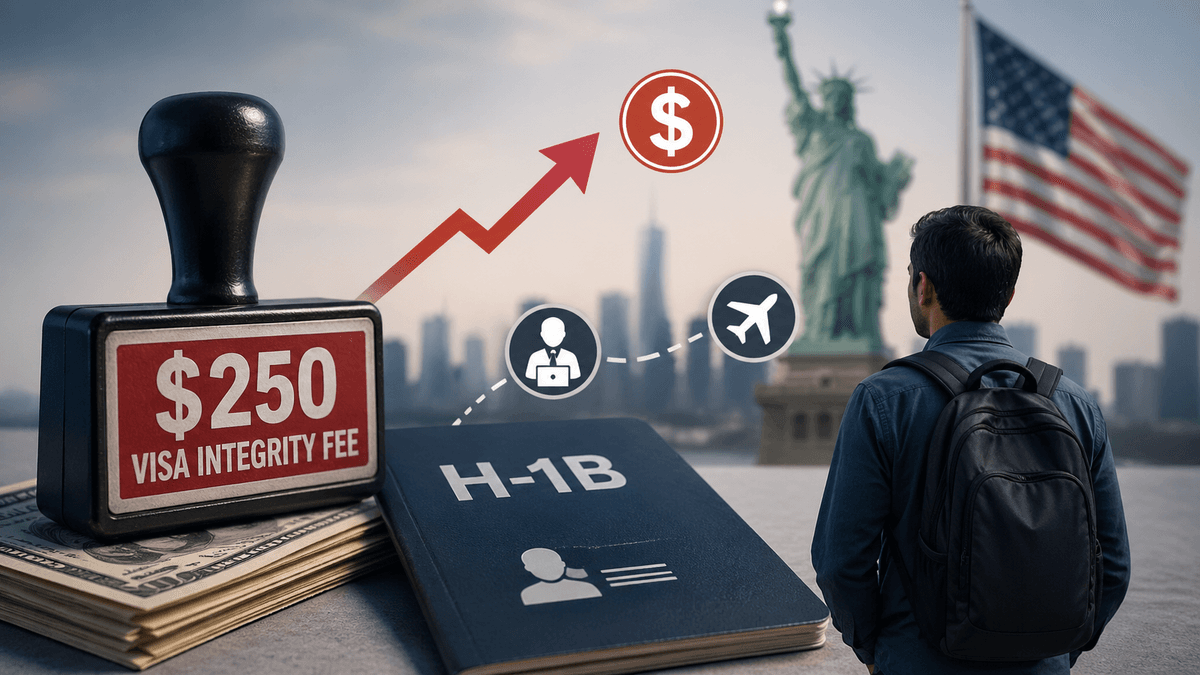
The United States has introduced a new $250 Visa Integrity Fee as part of its 2025 immigration enforcement reforms. This fee affects a wide range of visa applicants, including H-1B workers, F-1 international students, and B-1/B-2 tourists, raising important questions about its impact and purpose.
The change was proposed under recent U.S. legislative efforts aimed at strengthening visa security, detecting fraud, and funding system upgrades. While the fee may appear modest, it adds to an already expensive visa process for many applicants — particularly for those coming from developing countries or on tight budgets like international students.
For employers sponsoring foreign workers, this new fee adds to existing financial obligations such as the H-1B filing fee, fraud prevention fee, and legal processing costs. Likewise, students already paying the SEVIS fee and expensive tuition may find this additional charge burdensome. Even B-1/B-2 tourists — often overlooked in immigration policy debates — could now face a fee that may discourage casual or short-term travel.
Understanding the Visa Integrity Fee’s purpose, implementation details, and who exactly must pay it is essential for anyone planning a U.S. visa in 2025. Whether you're applying for your first visa, transferring to a new status, or renewing an existing one, here's everything you need to know.
What Is the $250 Visa Integrity Fee?
The $250 Visa Integrity Fee is a newly implemented charge introduced by the U.S. government in 2025. Its primary goal is to help fund initiatives aimed at strengthening the integrity of the visa system, including fraud detection, data analytics, and compliance enforcement. The fee is being applied across several categories of nonimmigrant visas, particularly those prone to high volumes or historic misuse.
Unlike existing visa application or issuance fees, the Visa Integrity Fee is designed specifically to support internal investigations, technology upgrades, and third-party audits of visa sponsors and applicants. U.S. immigration authorities have expressed concern about increasing fraud patterns — such as document manipulation, overstays, and ghost consultancies — especially in categories like H-1B and F-1.
According to government sources, the $250 charge is not meant to replace other fees, but rather sits on top of current requirements like the DS-160 processing fee, SEVIS fee (for students), and employer-paid H-1B filing fees. Its introduction reflects a growing shift toward "self-funded" immigration enforcement, where visa applicants and sponsors bear the cost of system improvements and oversight.
The fee became effective for all qualifying applications submitted on or after July 1, 2025, and is expected to raise millions annually to support USCIS, ICE, and Department of State fraud-prevention operations.
Who Has to Pay This Fee in 2025?
The $250 Visa Integrity Fee applies to a broad range of nonimmigrant visa categories, with specific emphasis on high-volume and high-risk segments. According to the Department of Homeland Security (DHS) and the U.S. State Department, the fee must be paid by applicants under visa types such as H-1B (temporary skilled workers), F-1 (international students), and B-1/B-2 (business and tourist visitors).
For H-1B visa holders, the fee generally applies during the initial petition filing or consular visa stamping, and may also apply during extensions or changes of employer. However, in most cases, employers are expected to pay this fee as part of their overall sponsorship cost, unless explicitly shifted to the beneficiary by contractual agreement (which is often discouraged by USCIS regulations).
F-1 students are expected to pay the fee at the time of DS-160 submission — alongside their regular visa application fee and SEVIS fee. This includes not just degree-seeking students but also those applying for OPT or STEM OPT extensions if it involves a visa issuance. However, it may not apply to F-1 change-of-status requests made within the U.S. unless a visa stamp is sought abroad.
For B-1/B-2 applicants, the fee is added during the application process at U.S. consulates, either as part of the regular DS-160 payment or as a separate charge depending on the post. While occasional travelers may see it as a minor inconvenience, frequent business visitors could find the fee adds up over time, especially if visas are issued with shorter validity durations.
At the time of writing, visa categories like J1 (exchange visitors), L1 (intra-company transferees), O1 (extraordinary ability), and TN (Canadian/Mexican NAFTA professionals) are not explicitly included, but this could change as policy evolves. Exemptions may apply for government-sponsored scholars, diplomats, or individuals traveling on official missions.
How the Fee Impacts H-1B Applicants and Employers
The introduction of the $250 Visa Integrity Fee adds a new financial consideration to an already costly process for both H-1B applicants and their sponsoring employers. Although the fee may appear small in isolation, it builds on an already stacked list of expenses involved in H-1B sponsorship.
For most H-1B petitions, the fee is triggered at the initial filing or visa stamping stage. Here’s how it affects stakeholders:
🔹 For Employers (H-1B Sponsors):
Must usually cover the fee during petition filing (along with Form I-129 fees, ACWIA, fraud prevention, and legal fees).
Adds to the total cost of sponsorship — often reaching $4,000–$7,000 per employee.
May impact smaller companies or startups more than large-cap employers.
🔹 For H-1B Workers:
If applying for a visa at a U.S. consulate abroad, the fee is collected along with the DS-160 application or issuance fees.
May apply again in case of H-1B transfers or employer changes that require visa stamping.
Will not typically apply to amendments filed purely for location or job duty changes unless a consular visit is needed.
📌 Important Note: In many cases, U.S. labor law prevents employers from shifting government filing fees to employees, especially those related to immigration compliance. However, not all companies follow this properly — foreign workers should clarify who bears the cost upfront.
The fee also raises a concern for H-1B workers who travel frequently and need new visa stamps. Every consular visit may now come with an added financial burden.
Impact on International Students (F-1 Visa Holders)
For international students, the $250 Visa Integrity Fee introduces an additional financial layer to what is already a costly and complex journey. While the F-1 visa has long required students to pay the SEVIS fee and standard visa application charges, this new integrity fee has added yet another expense — often at a time when many students are financially stretched.
Most F-1 visa applicants are required to pay this fee at the point of DS-160 submission or during visa stamping. This applies whether the applicant is seeking a visa for the first time or is returning from a trip abroad and needs a new visa stamp to re-enter the U.S.
When F-1 Students Need to Pay the Fee:
During initial F-1 visa issuance (outside the U.S.).
When applying for visa renewal or revalidation during OPT/STEM OPT.
During a change of status (COS) to F-1 only if visa stamping is required abroad.
Possibly during change of degree level or transferring to another institution if consular processing is involved.
Financial Impact on Students:
Adds to existing charges:
– SEVIS I-901 Fee: $350
– DS-160 Visa Application Fee: $185
– Now Visa Integrity Fee: $250Total upfront fees can exceed $785 USD even before tuition and living expenses.
Particularly burdensome for students from countries with weak currency exchange rates or limited scholarships.
For students on STEM OPT or those planning CPT/OPT transitions, this fee may also apply if international travel is involved. Each consular visit to get a new visa stamp could trigger another payment.
📌 Quick Tip: Students should plan ahead by factoring in this fee while budgeting for travel or re-entry to the U.S., especially if applying for internships, job interviews, or conferences abroad.
Does This Affect B-1/B-2 Tourists and Business Travelers?
Yes, the $250 Visa Integrity Fee also applies to B-1/B-2 visa applicants, which includes tourists, family visitors, and short-term business travelers. This has come as a surprise to many, since the B-1/B-2 category has traditionally been treated as lower-risk and less regulated compared to employment or student visas.
For these applicants, the fee is generally applied at the time of scheduling the visa appointment or when submitting the DS-160 form at U.S. embassies and consulates.
Who Pays the Fee in This Category:
First-time B-1/B-2 visa applicants attending interviews abroad.
Individuals renewing a B-1/B-2 visa through in-person appointments.
Frequent business travelers who require regular renewals or re-stamping.
How It Affects Different Traveler Types:
🧓 Elderly visitors and parents of H-1B workers or Green Card holders may feel the impact most — many are retirees on fixed incomes.
Global Briefing
Get the week's most critical immigration news and policy analysis directly in your inbox.
💼 Business travelers making frequent visits could face recurring charges, increasing overall travel costs for companies.
✈️ Tourists may reconsider or delay U.S. travel if the combined fee structure becomes prohibitive.
When & How It’s Collected:
Usually paid during the DS-160 submission process, bundled with the regular visa fee.
Some consulates may collect it separately during appointment scheduling (varies by country/consular post).
No refunds provided for denied visas.
📌 Tip: Travelers should confirm the total amount due on the U.S. embassy or consulate website before making payments, as reciprocity fees and this new integrity fee can vary based on nationality.
Although it may seem like a small addition for a single trip, this fee could deter casual tourism and make the U.S. a costlier destination compared to other countries with more streamlined or visa-free entry for certain nationalities.
Reactions and Criticisms of the Fee
The rollout of the $250 Visa Integrity Fee has sparked mixed reactions among immigration experts, advocacy groups, and affected applicants. While the U.S. government defends the fee as a necessary measure to maintain visa integrity and enhance enforcement, many argue it disproportionately burdens legitimate travelers, students, and workers.
Supporters Say:
The fee helps fund anti-fraud efforts, including background checks and employer audits.
It ensures visa programs are financially self-sustaining, reducing reliance on taxpayer funds.
It can improve processing efficiency and strengthen the overall vetting process.
Critics Argue:
It adds a financial strain on already vulnerable groups, especially students and family visitors.
May be perceived as a revenue-generating tactic rather than a fraud deterrent.
Penalizes genuine applicants for systemic issues often caused by a small percentage of abusers.
Could make the U.S. less competitive for international talent and tourism.
Several immigration advocacy organizations have called for:
Waivers for students from low-income countries.
Fee exemptions for family-based B-1/B-2 applicants, especially elderly parents.
Transparent reporting on how the collected funds are used.
Public Reaction Snapshot:
“It’s already expensive enough to study in the U.S., now we’re being asked to fund the government’s investigations too?” — F-1 Student from India
“$250 might be small for a business traveler, but for a retired parent visiting their children, that’s a big deal.” — H-1B visa holder from California
This fee also draws comparisons to prior U.S. visa charges like:
💰 The $500 Fraud Prevention Fee for H-1Bs.
📦 The SEVIS I-901 fee for F, J, and M visas.
🔄 Various reciprocity fees for nonimmigrant visa issuance.
What to Expect in the Future — Will This Fee Stay or Rise?
As with many immigration-related policies, the future of the $250 Visa Integrity Fee remains uncertain. While it’s currently active and applicable as of mid-2025, immigration analysts suggest that this fee could either expand, increase, or even be repealed — depending on political shifts, agency funding needs, and feedback from stakeholders.
Possibilities Going Forward:
The fee may increase in future years, especially if Congress fails to allocate enough budget for USCIS or State Department operations.
Other visa categories (like J1, L1, or O1) may be added to the list of affected groups, depending on fraud trends and enforcement priorities.
The fee could become a per-visit charge for visa holders who require multiple entries or re-stamping abroad.
Factors That Could Influence Changes:
Outcome of the 2026 U.S. midterm elections and immigration policy stance of the next administration.
Legal challenges or lawsuits by immigration advocates arguing the fee is discriminatory or excessive.
Pressure from universities and employers who may see international enrollment or hiring drop due to higher costs.
What Applicants Should Do:
Stay updated by following official sites like uscis.gov, travel.state.gov, and the Federal Register for policy changes.
Consult with immigration attorneys or Designated School Officials (DSOs) for guidance on how the fee applies in specific cases.
Monitor updates on visa bulletin and fee pages — especially before planning travel or filing any petitions.
While the fee might remain at $250 for now, the broader trend in immigration processing leans toward greater scrutiny, higher compliance, and increased cost-sharing with visa seekers.
Conclusion
The new $250 Visa Integrity Fee adds another layer of complexity and cost to an already demanding U.S. visa process. Whether you're applying as an H-1B worker, an F-1 student, or a B-1/B-2 visitor, this fee now forms part of your visa planning — both financially and logistically.
Although the government justifies the fee as necessary for improving fraud detection and visa program oversight, critics rightly point out the burden it places on genuine applicants. Students on tight budgets, tourists visiting family, and small employers already facing high compliance costs are among the most affected.
Understanding who needs to pay, when it's due, and how it fits into your broader visa strategy is critical. In some cases, like international travel during OPT or consular stamping for H-1B transfers, this fee could come up unexpectedly — so it's wise to stay informed and prepare accordingly.
📌 For more on related costs and procedures, explore these articles on Visa Fee Breakdown for U.S. Visas and Step-by-Step H-1B Visa Filing.
