
New Immigration Rule Could Fine Migrants $5,000 for Missing Court Dates
A proposed immigration rule could impose fines of up to $5,000 on migrants who fail to appear for scheduled immigration court hearings. Immigration advocates warn the policy may disproportionately affect vulnerable individuals facing language, transportation, or legal barriers.

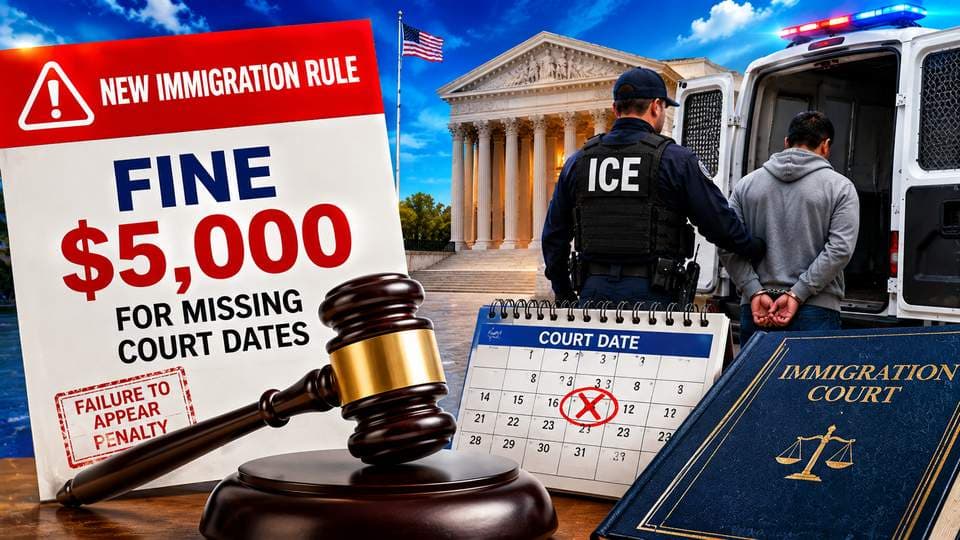
A proposed immigration enforcement rule in the United States is drawing sharp attention after reports suggested some migrants could face fines of up to $5,000 for missing court hearings. The move comes as immigration authorities push for stricter compliance in 2026.
For many immigrants, missing a hearing is not always intentional. Confusing paperwork, address changes, language barriers, and delayed notices have long created problems inside the already overloaded immigration court system.
Now, advocates warn the new penalty could place additional pressure on vulnerable families, while supporters argue tougher consequences are necessary to improve court attendance and speed up immigration cases across the country.
Who Could Be Affected by the $5,000 Immigration Fine?
The proposed rule is expected to impact a wide range of migrants involved in the U.S. immigration court system. While officials say the measure targets missed hearings, immigration advocates argue many people miss court dates because of paperwork issues, communication problems, or sudden life changes.
Here are the groups most likely to face risk under the proposed 2026 policy:
Asylum Seekers
People applying for asylum could be among the most vulnerable under the rule. Many asylum seekers arrive in the U.S. with limited financial resources and little understanding of the immigration court process.
Common challenges include:
Difficulty understanding legal notices in English
Frequent relocation after arrival
Limited access to immigration attorneys
Fear and confusion during ongoing court proceedings
Even a missed notice or scheduling misunderstanding could potentially lead to serious financial penalties.
Migrants Released With Notices to Appear (NTA)
Many migrants released at the border receive a Notice to Appear (NTA), which contains details about future immigration hearings. Missing one of these scheduled court dates may place individuals directly at risk under the proposed fine policy.
This group may include:
Recently arrived migrants
Individuals awaiting asylum hearings
People released while their immigration cases continue
In some cases, hearing dates may change unexpectedly, creating additional confusion for migrants trying to keep track of court updates.
Families and Individuals in Removal Proceedings
Migrants already facing deportation or removal proceedings could also be heavily affected. Immigration courts often handle thousands of cases, and delays or communication issues are common.
Potential concerns include:
Parents balancing work and childcare responsibilities
Individuals moving between shelters or temporary housing
Limited transportation access for court appearances
Advocates warn that financial penalties could place additional stress on families already struggling with legal uncertainty.
Migrants Who Recently Changed Addresses
One of the biggest reasons immigrants miss court notices is address-related problems. Court documents are typically mailed, and even small filing mistakes can cause important hearing information to never arrive.
Migrants may face problems if they:
Move without updating immigration records quickly
Submit incorrect address details
Experience mail delivery delays
Live in temporary or shared housing situations
Immigration attorneys frequently advise migrants to immediately report any address change to avoid missing critical court notifications.
Why Missing an Immigration Court Date Happens So Often
Immigration officials often treat missed court hearings as noncompliance, but attorneys and advocacy groups say the reality is far more complicated. Many migrants face everyday obstacles that make keeping track of court dates extremely difficult.
In 2026, with immigration cases continuing to rise across the United States, missed hearings remain a major issue across an already overloaded court system.
Language and Translation Barriers
Many migrants receive legal documents entirely in English, even when they are not fluent in the language. Important hearing details can easily be misunderstood or overlooked.
Common problems include:
Difficulty reading legal terminology
Incorrect interpretation of hearing dates
Limited access to translators or legal help
Confusion during phone or virtual hearings
For newly arrived migrants, navigating the immigration system without language support can become overwhelming very quickly.
Incorrect or Outdated Addresses
A large number of missed court notices are linked to address problems. Immigration courts usually send hearing information through mail, and even small mistakes can prevent notices from reaching the correct person.
This often happens when migrants:
Move to a new apartment or shelter
Change cities for work opportunities
Forget to update their address with immigration authorities
Experience delayed or lost mail deliveries
In some situations, migrants may not even realize a hearing was scheduled until after missing it.
Confusing Hearing Notices
Immigration court paperwork can be difficult to understand, especially for people unfamiliar with the U.S. legal system. Some notices contain multiple dates, technical language, or last-minute schedule changes.
Migrants frequently report confusion over:
Different court locations
Rescheduled hearing dates
Virtual versus in-person appearances
Multiple case documents arriving separately
Advocates argue that the complexity of the process itself contributes to missed appearances.
Transportation and Financial Challenges
For many immigrants, simply reaching the courthouse can become a major challenge. Some hearings are scheduled far from where migrants currently live, requiring long-distance travel and missed workdays.
Financial and logistical barriers may include:
Lack of reliable transportation
Inability to afford travel costs
Missing hourly wages to attend hearings
Childcare responsibilities during court dates
Families already under financial pressure may struggle to balance daily survival needs with complicated immigration procedures.
How Immigration Authorities May Enforce the New Rule in 2026
U.S. immigration authorities are expected to use closer coordination between enforcement agencies and immigration courts if the proposed fine policy moves forward. Officials say the goal is to increase court attendance and reduce missed hearings.
ICE and DHS Coordination With Immigration Courts
Agencies such as U.S. Immigration and Customs Enforcement and Department of Homeland Security could work more closely with immigration courts to track missed appearances and issue civil penalties faster.
Possible enforcement steps may include:
Monitoring court attendance records
Sending penalty notices after missed hearings
Sharing case information across agencies
Increasing follow-up actions in removal cases
Civil Penalties and Debt Collection Concerns
The proposed rule focuses on civil fines rather than criminal charges, but advocates warn the financial impact could still be severe for low-income migrant families.
Critics fear unpaid penalties may:
Create long-term debt problems
Affect credit or financial stability
Increase pressure on vulnerable households
Lead to additional legal complications
Possible Impact on Future Immigration Applications
Immigration attorneys also warn that missed court appearances and unpaid fines could potentially affect future immigration benefits or applications.
This may include:
Asylum requests
Green card applications
Work authorization renewals
Other immigration relief cases
Supporters of the policy argue stricter consequences may encourage higher court attendance rates, while critics believe the rule could unfairly punish migrants facing genuine hardships.
Can Migrants Avoid the $5,000 Fine?
Immigration attorneys say migrants may still be able to reduce the risk of penalties by staying proactive with court updates and maintaining accurate records. Since many missed hearings happen because of communication problems, taking early steps could become even more important under stricter 2026 enforcement policies.
Experts recommend closely tracking every immigration notice and responding quickly if any hearing information changes.
Updating Address Information Immediately
One of the most important steps is keeping address information updated with immigration authorities. Court notices are usually mailed, and outdated records can easily cause migrants to miss critical hearing dates.
Migrants should:
Report address changes as soon as possible
Double-check mailing details for accuracy
Keep copies of submitted address update forms
Monitor mail regularly after moving locations
Even small address mistakes may create major legal complications later.
Monitoring EOIR Case Status Online
The Executive Office for Immigration Review (EOIR) allows migrants to check case updates online or through automated systems. Regularly monitoring case status may help prevent missed hearing dates or unnoticed schedule changes.
Important things to track include:
Upcoming hearing dates
Court location updates
Rescheduled appearances
Changes in immigration case status
Attorneys often advise migrants not to rely only on mailed notices.
Requesting Hearing Rescheduling Properly
If attending a hearing becomes impossible, legal experts recommend formally requesting a rescheduling instead of simply missing the court date. Immigration judges may consider certain emergencies or exceptional circumstances.
Valid situations may include:
Medical emergencies
Severe transportation problems
Family emergencies
Scheduling conflicts supported by evidence
Proper documentation can become extremely important if authorities later review the missed appearance.
Seeking Legal Assistance Early
Immigration lawyers and nonprofit legal organizations can often help migrants understand hearing notices, filing deadlines, and court procedures. Early legal guidance may reduce the chances of costly mistakes.
Global Briefing
Get the week's most critical immigration news and policy analysis directly in your inbox.
Legal support may help migrants:
Understand immigration paperwork
File motions correctly
Respond to missed hearing notices
Prepare evidence for court proceedings
Advocates say many court problems could potentially be avoided when migrants receive clear legal guidance early in the process.
What Immigration Advocates and Critics Are Saying
The proposed $5,000 immigration court fine has triggered strong reactions from legal experts, immigrant advocacy groups, and enforcement supporters across the United States. As immigration courts continue facing record backlogs in 2026, critics argue the system itself is already difficult for many migrants to navigate.
According to data from the Transactional Records Access Clearinghouse (TRAC), U.S. immigration courts had more than 3.3 million active pending cases by early 2026, including over 2.3 million asylum-related cases waiting for hearings or decisions.
Concerns About Due Process
Immigration advocates say the proposed penalties could raise serious due process concerns, especially for migrants who never properly received hearing notices or struggled to understand court instructions.
Critics argue that:
Immigration paperwork is often highly technical
Notices may arrive only in English
Court dates can change with little warning
Overloaded courts increase confusion and delays
Legal groups also point to the growing court backlog as evidence that system-wide problems — not intentional avoidance — often contribute to missed hearings. Some immigration courts are now handling cases that may take years to resolve.
Fear of Increased Pressure on Immigrant Communities
Advocacy organizations warn the proposed rule could create additional fear inside immigrant communities already dealing with financial and legal uncertainty.
According to the Vera Institute’s Immigration Court Representation Dashboard, nearly 59% of migrants in pending deportation cases currently do not have legal representation.
Critics say migrants without lawyers are more likely to:
Misunderstand hearing notices
Miss important filing deadlines
Struggle with address updates
Fail to navigate complex court procedures
Recent reports have also highlighted concerns about court closures, judge shortages, and rapidly changing hearing schedules creating additional confusion for migrants.
Arguments From Supporters of Stricter Enforcement
Supporters of tougher immigration enforcement argue stronger penalties may improve court attendance and reduce delays in the immigration system. They say missed hearings slow down already overwhelmed courts and make enforcement more difficult.
Some enforcement advocates believe the policy could:
Encourage migrants to attend hearings consistently
Improve case tracking efficiency
Reduce administrative delays
Strengthen accountability within immigration proceedings
Federal officials have repeatedly cited the massive immigration court backlog as a reason for pushing stricter case management policies and faster enforcement measures in 2026.
Legal Questions and Challenges Around the Policy
The proposed $5,000 immigration fine is already raising major legal questions as attorneys, advocacy groups, and policy experts debate whether the rule could survive court challenges. Critics argue that enforcing financial penalties in an already overwhelmed immigration system may create serious due process concerns.
The debate comes at a time when U.S. immigration courts are handling record caseloads. According to TRAC immigration data, more than 3.28 million active cases were pending in immigration courts by March 2026, including over 2.3 million asylum-related cases.
Whether the Rule Could Face Lawsuits
Legal experts believe the proposed policy could quickly face lawsuits if implemented aggressively. Immigration organizations have already challenged several recent enforcement changes in federal court during 2025 and 2026.
Potential legal arguments may include:
Violations of due process protections
Lack of proper notice before penalties
Unfair punishment for administrative errors
Excessive financial burdens on low-income migrants
In March 2026, a federal judge blocked parts of a separate fast-track immigration appeals rule after finding the government failed to properly follow public rulemaking procedures.
Debate Over Fairness and Notice Requirements
One of the biggest concerns centers on whether migrants consistently receive accurate hearing notices. Immigration attorneys argue many missed hearings happen because of address issues, language barriers, or court scheduling confusion rather than intentional avoidance.
Current court system challenges include:
Massive immigration case backlogs
Frequent hearing rescheduling
Delayed mail notifications
Limited legal representation for migrants
TRAC data shows only about 32.8% of immigrants had legal representation in cases where removal orders were issued during March 2026.
Advocates say imposing large fines without guaranteeing reliable communication could create additional legal and ethical concerns.
Comparison With Previous Immigration Enforcement Measures
The proposal also reflects a broader shift toward stricter immigration enforcement policies seen during recent years. Earlier enforcement efforts mainly focused on detention, expedited removals, and tighter asylum restrictions.
The new fine proposal differs because it could:
Create direct financial penalties tied to court attendance
Expand consequences beyond deportation proceedings
Increase pressure on migrants already facing lengthy legal delays
At the same time, immigration courts continue to face operational strain. Reports in 2026 showed some courts handling thousands of pending cases per judge, while hearing delays in certain areas stretched for years.
What Migrants Should Do If They Missed a Court Hearing
Missing an immigration hearing can create serious legal problems, but attorneys say acting quickly may help reduce the damage in some situations. Ignoring the issue could lead to additional penalties, removal orders, or complications in future immigration cases.
Legal experts recommend responding immediately after discovering a missed court date.
Contact an Immigration Attorney Quickly
One of the first steps after missing a hearing is speaking with an immigration attorney or accredited legal representative. Early legal advice can help migrants understand available options before the case becomes more complicated.
An attorney may help:
Review court records and hearing details
Explain possible penalties or consequences
Prepare legal filings correctly
Communicate with immigration courts on the migrant’s behalf
Fast action is often critical because immigration deadlines can move quickly.
File a Motion to Reopen if Eligible
In some cases, migrants may request the immigration court to reopen their case after missing a hearing. This is usually done through a legal filing known as a Motion to Reopen.
Courts may consider reopening a case if:
The migrant never received proper notice
A serious emergency prevented attendance
Incorrect address information caused problems
Exceptional circumstances can be proven
Approval is not guaranteed, but legal experts say filing quickly may improve the chances of consideration.
Gather Proof of Exceptional Circumstances
Documentation can become extremely important when explaining why a hearing was missed. Immigration judges may review evidence carefully before making decisions about penalties or reopening cases.
Helpful documents may include:
Medical records or hospital paperwork
Proof of transportation emergencies
Address change records
Copies of delayed or incorrect notices
Attorneys often advise migrants to keep copies of every immigration document and communication connected to their case.
How This Rule Fits Into Broader U.S. Immigration Enforcement in 2026
The proposed $5,000 immigration fine is part of a larger shift toward stricter enforcement policies across the United States in 2026. Federal agencies are increasingly focusing on compliance, case tracking, and faster immigration processing as political pressure around border security continues to grow.
Supporters view these measures as necessary for improving accountability, while critics argue they may place heavier burdens on migrants already navigating a complex legal system.
Growing Use of Stricter Compliance Measures
In recent years, immigration enforcement has expanded beyond border security alone. Authorities are now placing greater emphasis on ensuring migrants follow court procedures, reporting requirements, and case deadlines.
Recent enforcement trends include:
Tougher penalties for missed court appearances
Expanded use of electronic case tracking
Increased verification and identity checks
Faster responses to immigration violations
Legal observers say the proposed fine reflects a broader push for stricter compliance across the immigration system.
Increased Monitoring of Immigration Cases
Immigration agencies are also relying more heavily on digital systems and inter-agency coordination to monitor active cases. Court records, hearing schedules, and immigration status updates are becoming more connected than in previous years.
This may involve:
Closer coordination between ICE, DHS, and immigration courts
Faster updates to immigration databases
Improved tracking of hearing attendance
Greater use of automated notifications and records
Critics warn that increased monitoring could raise privacy and due process concerns for some immigrant communities.
Connection to Wider Border and Deportation Policy Debates
The proposed rule is also tied to the broader national debate over border security and deportation policy. Immigration enforcement remains one of the most politically sensitive issues in the United States heading into the later part of 2026.
Supporters argue stricter enforcement may:
Reduce missed immigration hearings
Strengthen border management efforts
Improve public confidence in the immigration system
Meanwhile, opponents believe tougher policies could:
Increase fear among immigrant families
Discourage cooperation with authorities
Add pressure to already overcrowded immigration courts
As immigration debates continue nationwide, policies tied to court enforcement are expected to remain under close political and legal scrutiny.
Final Take
The proposed $5,000 fine for missing immigration court hearings highlights the growing push for stricter immigration enforcement in the United States during 2026. Supporters see it as a way to improve accountability, while critics warn it could unfairly affect vulnerable migrants facing communication and legal challenges.
At the same time, questions remain about how the policy would be enforced and whether legal challenges could delay or limit its implementation. Immigration attorneys continue to stress the importance of attending court hearings, updating address records, and closely monitoring case notices.
As immigration policies continue evolving, stricter compliance measures and tighter enforcement are expected to play an even bigger role in the U.S. immigration system in 2026 and beyond.
