
ICE Now Uses Facial Scans During Arrests: Know Your Rights if Approached
ICE officers are increasingly using mobile facial scanning technology during field arrests and immigration enforcement operations.

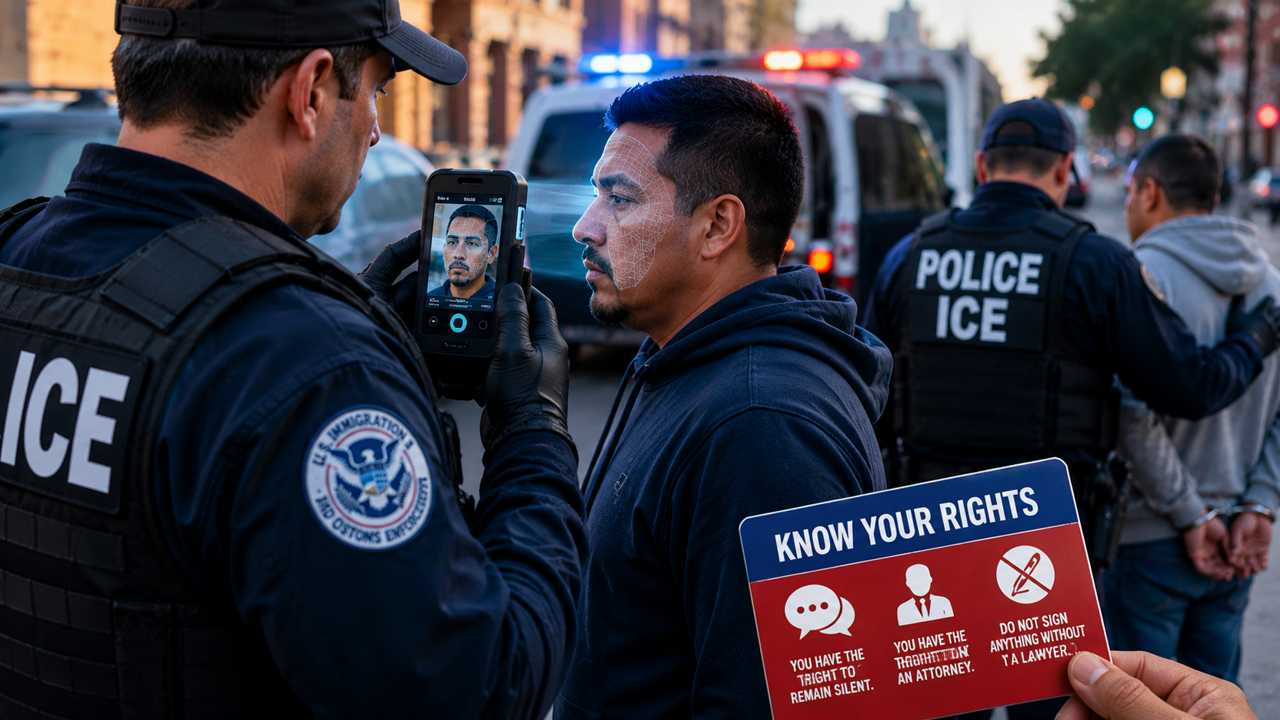
A new layer of technology is quietly becoming part of immigration enforcement in the United States. ICE officers are increasingly using facial scanning tools during some arrests and field encounters, raising fresh concerns about privacy and civil rights.
For immigrant families, the idea of being identified within seconds through a mobile device feels unsettling and unfamiliar. Advocates warn that many people still do not fully understand what rights they have when approached by immigration officers.
As biometric technology expands across federal agencies, immigration attorneys say preparation matters more than panic. Knowing how to respond calmly, legally, and safely during an ICE encounter could make a critical difference.
What ICE Facial Scanning Means During Arrests
ICE officers may use facial scanning technology to quickly compare a person’s face with government databases during enforcement operations. In simple terms, the system analyzes facial features to help confirm someone’s identity in real time.
Unlike fingerprinting, which requires physical contact, facial scans can often be done using mobile devices or cameras during field encounters. Supporters say the technology helps agents identify people faster and reduce paperwork delays.
But the growing use of biometric tools has also raised concerns. Civil liberties groups warn about possible privacy risks, mistaken identity cases, and how facial recognition systems could expand government surveillance in immigration enforcement.
Key Concerns Often Raised:
Accuracy problems in some facial recognition systems
Privacy and personal data collection worries
Fear of broader biometric tracking in public spaces
Questions about how long facial data may be stored or shared
When ICE May Approach Someone in Public or at Home
ICE encounters can happen in several different situations, including targeted enforcement operations, workplace actions, home visits, or traffic stops involving cooperation with local law enforcement. In many cases, officers may begin by asking questions before deciding whether to detain someone.
It is important to understand that not every interaction automatically leads to an arrest. Some encounters may involve identity verification, immigration-related questioning, or document checks during an ongoing operation.
Common Situations Where Encounters May Happen
Public locations such as parking lots, workplaces, or outside courthouses
Home visits where officers attempt to question residents
Traffic-related stops tied to local agency coordination
Targeted enforcement actions involving specific individuals
Public Encounters vs. Home Entry
ICE officers can question people in public spaces, but entering a private home is different. In many cases, officers need either permission to enter or a judicial warrant signed by a judge, not just administrative immigration paperwork.
Know Your Rights if ICE Tries to Question or Scan You
An encounter with ICE can feel stressful and fast-moving, especially if officers are using phones, cameras, or biometric devices. Legal experts say staying calm and understanding your basic rights can make a major difference during the interaction.
You Have the Right to Remain Silent
You generally do not have to answer questions about your immigration status, birthplace, or how you entered the U.S. You can also ask to speak with an attorney before answering additional questions.
You Can Ask to See a Warrant
ICE officers may carry administrative immigration paperwork, but that is different from a judicial warrant signed by a judge. In many situations, officers cannot legally enter a private home without permission or proper judicial authorization.
Ask if You Are Free to Leave
If officers stop you in public, you may calmly ask whether you are being detained or if you are free to leave. If you are not under arrest, you may be allowed to walk away.
Do Not Provide False Documents or Information
Global Briefing
Get the week's most critical immigration news and policy analysis directly in your inbox.
Immigration attorneys strongly warn against using fake documents or giving false information during an encounter. Staying calm and avoiding sudden actions is usually important.
You Can Document the Encounter
In some situations, family members or bystanders may legally record public interactions with officers if local laws allow it. Experts recommend keeping a safe distance and avoiding interference with enforcement activity.
Facial Scan Concerns
Rules surrounding biometric collection and facial scans can vary depending on the circumstances of the encounter. Because immigration situations can become legally complex very quickly, attorneys recommend contacting an immigration lawyer as soon as possible after any enforcement interaction involving biometric screening.
Why Privacy Advocates Are Alarmed About Facial Recognition
Civil rights and privacy organizations have spent years warning about the growing use of facial recognition technology in law enforcement. As biometric tools become more common in immigration enforcement, concerns are increasing over how the technology may affect immigrant communities across the U.S.
Critics argue that facial recognition systems are not always accurate and could lead to serious mistakes during enforcement operations. Some advocacy groups also fear the technology may expand government surveillance capabilities far beyond traditional immigration checks.
Main Concerns Raised by Advocates
Possible cases of mistaken identity during enforcement actions
Claims that some facial recognition systems show racial or ethnic bias
Concerns over how biometric data is stored, shared, or tracked
Fears about expanding surveillance and large government databases
Many immigrant families say the use of facial scanning can create additional fear during encounters with authorities, especially for mixed-status households already worried about immigration enforcement.
Supporters of the technology argue it can improve identification and public safety, but critics say the bigger debate is about how to balance security needs with privacy and civil liberties protections.
What Immigrant Families Should Do Right Now
Immigration attorneys and advocacy groups say preparation can help families respond more calmly if an ICE encounter happens unexpectedly. Having important information ready ahead of time may reduce confusion during stressful situations.
Steps Families Can Take
Keep passports, IDs, immigration paperwork, and medical records organized in one safe place
Save the phone number of a trusted immigration lawyer or legal aid group
Create a family emergency plan in case a parent or relative is detained
Teach children who they should call if an emergency happens
Avoid signing documents without fully understanding what they say
Families are also encouraged to stay updated through trusted legal organizations, immigrant advocacy groups, and verified community resources rather than relying on rumors online.
Community Support Can Matter
In some areas, local community response networks and rapid-response legal hotlines may help connect families with attorneys, translators, or emergency support after an immigration enforcement encounter.
Final Take
ICE’s growing use of facial scanning highlights how biometric technology is becoming a larger part of immigration enforcement across the United States. Supporters argue the tools can help officers confirm identities faster and improve security during operations.
Critics, however, warn that expanded facial recognition may increase privacy concerns, surveillance fears, and anxiety within immigrant communities already facing enforcement pressure.
As biometric technology continues expanding in law enforcement, immigration experts say preparation, awareness, and legal guidance may become more important than ever.