
Logo
search
homeHome Live Updates

Follow Us

â—Ź6 min read

Asylum Work Permits Could Be Cut Back Under Trump Administration Proposal

A new Trump administration proposal could make it harder for asylum seekers to obtain work permits in the United States. Immigration advocates warn the changes may increase financial hardship for families awaiting case decisions.

C
Camila
MAY 13, 2026 at 4:27 PM UTC
📍United States
Asylum Work Permits Could Be Cut Back Under Trump Administration Proposal
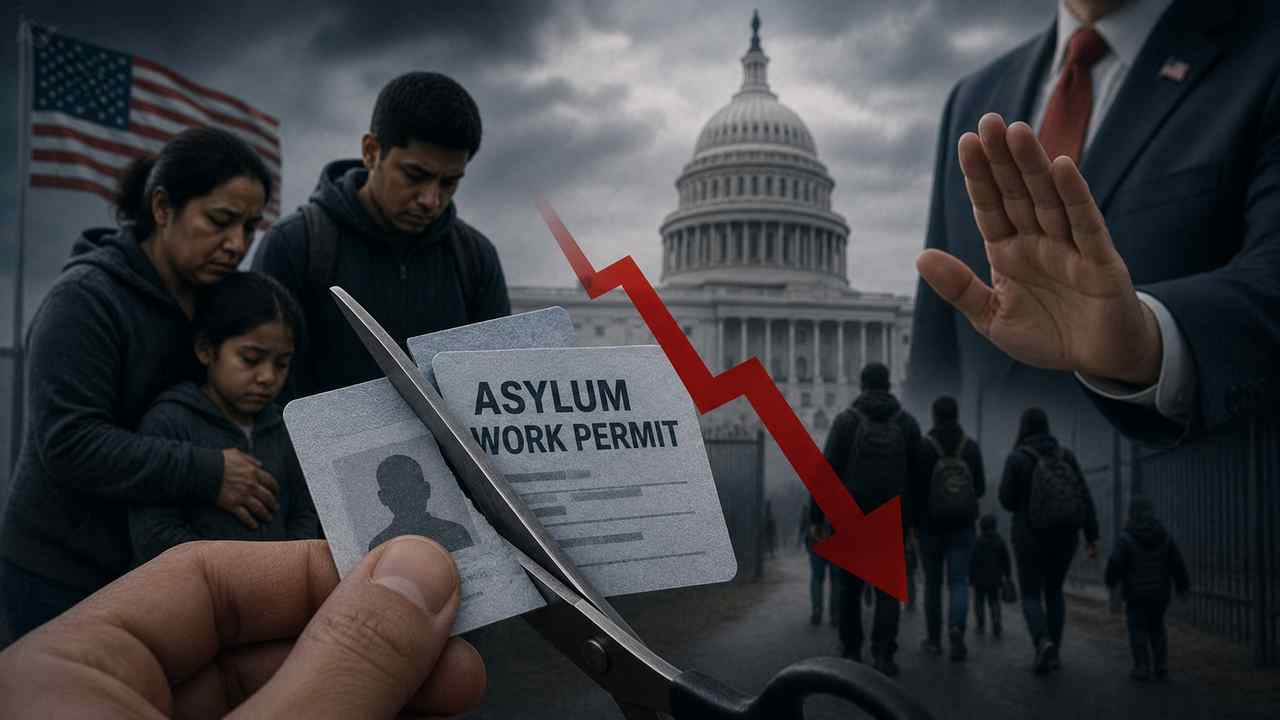
A migrant family walks near a federal immigration building as debate grows over asylum work authorization policies.

A new immigration proposal tied to the Trump administration could make it harder for asylum seekers in the U.S. to legally work — a move that is already raising concerns among immigration advocates and legal experts. For many families waiting years for court decisions, the change could directly affect how they survive day to day.

Officials backing the proposal argue the current system has been abused and say tighter work permit rules may discourage weak asylum claims. But critics warn the policy could leave thousands stuck in limbo, unable to earn income while their immigration cases slowly move through an already overwhelmed system.

With asylum backlogs growing and immigration remaining a major political flashpoint, the proposal is quickly turning into another high-stakes debate over how far the U.S. should go in tightening asylum rules.

What the Proposal Could Change

Under the proposal, asylum applicants may face stricter requirements and longer waiting periods before becoming eligible for work permits in the United States. The administration is reportedly exploring additional background reviews and tougher screening standards tied to employment authorization requests.

Current rules already require many asylum seekers to wait months before applying for legal work authorization, but the new plan could slow that process even further. Immigration attorneys say even small delays can create major financial pressure for families who arrive in the U.S. with limited resources.

Supporters of the proposal argue the changes are intended to protect the integrity of the asylum system and reduce incentives for fraudulent claims. However, critics say the policy risks punishing people with legitimate asylum cases who are simply trying to support themselves while waiting for court hearings.

Why the Administration Supports the Proposal

The Trump administration says stricter work permit rules are being introduced to reduce pressure on the immigration system and prevent misuse of asylum laws. Officials believe that easier access to work permits may encourage some migrants to file weak or incomplete asylum claims.

Key reasons being highlighted:

  • Stronger screening for asylum applicants

  • Reducing fraudulent immigration claims

  • Lowering incentives for illegal border crossings

  • Tightening overall immigration enforcement

Supporters also argue the proposal is part of a broader effort to reshape U.S. asylum policies and place stricter limits on immigration benefits during pending cases.

Critics Warn of Economic and Human Impact

Immigration advocates say the proposal could create serious financial hardship for asylum seekers who are already waiting years for court decisions. According to a recent report by Stateline, critics argue the rule would make it far more difficult for many migrants to legally support themselves, potentially pushing more people into unstable or off-the-books work.

The proposal could also increase delays tied to work permit approvals and renewals. Some lawmakers opposing the plan say the new rules would give immigration officials broader power to deny applications while adding extra procedural hurdles, including additional biometric requirements.

Business groups and immigrant rights organizations have also raised concerns about labor shortages in industries that already rely heavily on immigrant workers, including transportation, construction, and warehousing. Supporters of asylum seekers argue that many applicants are already contributing to local economies while waiting for their immigration cases to move through the system.

One Asylum Seeker Says Work Authorization Changed Her Life

Amal, an asylum seeker from Egypt, said “receiving a work permit in the United States helped me finally feel stable after months of uncertainty. Before getting authorization” she was struggling to support herself and manage daily expenses while waiting for updates on her immigration case.

It was explained by her that being allowed to work legally gave her a sense of independence and helped her begin rebuilding her life in a new country. Like many asylum applicants, temporary employment authorization was depended on by her while her case moved through the system. 

Under the proposed policy changes, immigrants in similar situations could face longer delays before becoming eligible to work legally. Advocates warn that extended waiting periods may leave many asylum seekers without reliable income during already stressful legal proceedings.

Immigration attorneys say the impact could be especially difficult for applicants who arrive in the United States with limited financial resources and no family support network. 

Potential Impact Across the United States

The proposed restrictions could affect thousands of asylum seekers living across major immigrant communities in states such as New York, Texas, California, and Florida. Many applicants currently rely on temporary work authorization while waiting for court hearings or USCIS decisions.

Industries that depend heavily on immigrant labor may also feel the impact if fewer asylum applicants are able to work legally. Small businesses, restaurants, construction companies, and service-sector employers in some areas could face additional workforce shortages.

Immigration experts say the changes may also increase pressure on local support organizations and shelters that assist newly arrived migrants. Delays in work authorization often make it harder for families to secure stable housing and long-term financial stability.

Some analysts believe the proposal could become part of a broader immigration policy debate during the upcoming election cycle, especially as border security and asylum processing remain major national issues in the United States.

What Applicants Should Watch Next

The proposal has not yet been fully implemented, and additional details could still change before any final policy takes effect. Immigration experts say applicants should closely monitor official updates from USCIS and the federal government in the coming months.

If the administration moves forward with the plan, legal challenges from immigration advocacy groups are also possible. Similar asylum and work permit restrictions introduced in previous years faced lawsuits and court reviews before being enforced nationwide.

Attorneys are encouraging asylum seekers with pending cases to stay informed about filing deadlines, document requirements, and any future rule changes that may affect employment authorization eligibility in the United States.

Final Takeaway

The proposed asylum work permit changes could become one of the administration’s most closely watched immigration policies in the coming months. If approved, the new rules may affect how quickly thousands of asylum seekers can legally begin working in the United States.

While supporters say the plan would strengthen immigration enforcement, critics believe it could create additional hardship for families already waiting through long processing delays. For now, applicants are being advised to follow official USCIS updates and prepare for possible policy changes ahead.
Next Article
â—Ź6 min read

Supreme Court Takes Up Trump Birthright Citizenship Battle as USCIS Adjusts Policy

The U.S. Supreme Court is revisiting the heated legal battle over birthright citizenship as immigration agencies begin adjusting related policies. The case could shape future citizenship rules for children born in the United States.

C
Camila
MAY 13, 2026 at 7:39 PM UTC
📍United States
Supreme Court Takes Up Trump Birthright Citizenship Battle as USCIS Adjusts Policy
The U.S. Supreme Court and USCIS are at the center of a renewed legal fight over birthright citizenship policy.

A growing legal fight over who qualifies for automatic U.S. citizenship is now heading to the nation’s highest court, putting immigration policy back at the center of a heated national debate. The case could shape how citizenship rules are interpreted for years to come.

The U.S. Supreme Court is preparing to review challenges tied to birthright citizenship policies pushed during the Trump era, while U.S. Citizenship and Immigration Services has quietly adjusted parts of its immigration guidance in response to ongoing legal uncertainty. Immigration attorneys say families across the country are closely watching what happens next.

For many immigrants, visa holders, and mixed-status households, the battle is about more than politics. It raises a deeply personal question: who gets recognized as American at birth — and whether long-standing constitutional protections could face a major new test.

Supreme Court Agrees to Hear Major Citizenship Case 

For more than 150 years, birthright citizenship in the United States has largely been treated as settled law. Now, that long-standing guarantee is facing fresh scrutiny as the U.S. Supreme Court steps into a legal fight connected to policies championed by Donald Trump.

At the same time, U.S. Citizenship and Immigration Services has started adjusting parts of its immigration guidance as officials prepare for possible legal and administrative ripple effects. The overlapping developments are creating new anxiety for immigrant families, temporary visa holders, and parents awaiting immigration decisions.

What makes this case especially powerful is the uncertainty surrounding it. For millions of families, the debate is no longer just about constitutional language or politics in Washington, it is about the future legal status of children born in America and what changes could come next.

What Exactly Is Birthright Citizenship?

Under the 14th Amendment, most children born on U.S. soil automatically become American citizens at birth — a principle that has guided U.S. immigration law for more than a century. The rule applies regardless of a family’s immigration status, with only a few limited exceptions such as foreign diplomats.

Supporters say the policy reflects a core constitutional promise and helps prevent generations of people from being left without legal status. Critics, however, argue the amendment has been interpreted too broadly over the years and should apply more narrowly.

That disagreement is now at the heart of the Supreme Court battle, turning a long-standing constitutional protection into one of the biggest immigration flashpoints in the country.

USCIS Begins Adjusting Immigration Guidance

While the Supreme Court prepares to hear the case, U.S. Citizenship and Immigration Services has already started making internal policy adjustments that immigration lawyers say could affect how certain applications are reviewed in the future.

According to legal observers, the agency is increasing scrutiny in some areas while preparing for possible changes tied to citizenship and family-based immigration policies. The updates are not a full rewrite of existing rules, but they are raising fresh concerns among immigrant communities.

Areas Families and Applicants Are Watching Closely:

  • Additional documentation requests in some immigration filings

  • Closer review of family-based immigration cases

  • Growing uncertainty for mixed-status households

  • Possible future impact on children born to temporary visa holders

  • Delays and confusion surrounding long-pending applications

Immigration attorneys say many families are now seeking legal guidance early, worried that future court rulings could eventually influence how federal agencies handle citizenship-related cases moving forward.

Immigration Advocates and Legal Experts Sound Alarm

The Supreme Court case is already triggering strong reactions from immigration groups, constitutional scholars, and policy experts across the country. Many advocates warn that even the possibility of limiting birthright citizenship is creating fear and confusion inside immigrant communities.

Several immigrant-rights organizations argue that changing the current interpretation of the 14th Amendment could open the door to lengthy legal battles over citizenship status, identity documents, and federal benefits. Some attorneys say families are increasingly asking whether future policy changes could affect children born in the United States.

Supporters of stricter immigration policies see the case differently. Conservative legal analysts argue the court now has an opportunity to revisit what they describe as an overly broad interpretation of citizenship protections and clarify how the Constitution should be applied in modern immigration cases.

What Could Happen if the Court Changes the Rules?

For now, birthright citizenship remains fully in place across the United States. But if the Supreme Court narrows the current interpretation, the impact could stretch far beyond immigration paperwork.

Legal experts say any major change could affect:

  • Children born to undocumented immigrants

  • Families living in the U.S. on temporary visas

  • Mixed-status households with pending immigration cases

  • State agencies responsible for birth records and identification documents

Immigration attorneys also warn that even if the court sides with stricter limits, implementation would likely face additional lawsuits and years of legal challenges. Still, the uncertainty alone is already leaving many families anxious about what comes next.

What Happens Next?

The Supreme Court is expected to hear arguments in the coming months, with immigration attorneys and advocacy groups closely tracking every development. A final ruling could arrive later in the court term and may ultimately reshape how citizenship laws are interpreted nationwide.

Until then, current birthright citizenship protections remain unchanged, meaning children born in the United States still automatically receive citizenship under existing law. However, the growing legal battle is already creating uncertainty for many immigrant families trying to plan their future.

Immigration experts say the case will likely become one of the most closely watched legal fights of the year, especially as federal agencies and policymakers prepare for the possibility of major immigration policy changes.

Final Take 

As the Supreme Court prepares to weigh one of the most sensitive immigration questions in decades, the debate over birthright citizenship is moving far beyond politics and into the lives of millions of families. What was once considered a settled constitutional protection is now facing renewed legal scrutiny at the highest level.

For immigrant communities, visa holders, and mixed-status households, the uncertainty is already real. While no immediate changes have taken effect, the outcome of the case could influence future immigration policy, citizenship rules, and how federal agencies handle family-based cases for years to come.

With national attention now fixed on the court, many families are left waiting for answers and watching closely to see how the next chapter of America’s immigration debate unfolds.

Next Article
Loading Next Story...
Reading:Asylum Work Permits Could Be Cut Back Under Trump Administration Proposal
Article 1 of 4

g_translateSelect Language

Loading languages...