Supreme Court Takes Up Trump Birthright Citizenship Battle as USCIS Adjusts Policy
The U.S. Supreme Court is revisiting the heated legal battle over birthright citizenship as immigration agencies begin adjusting related policies. The case could shape future citizenship rules for children born in the United States.

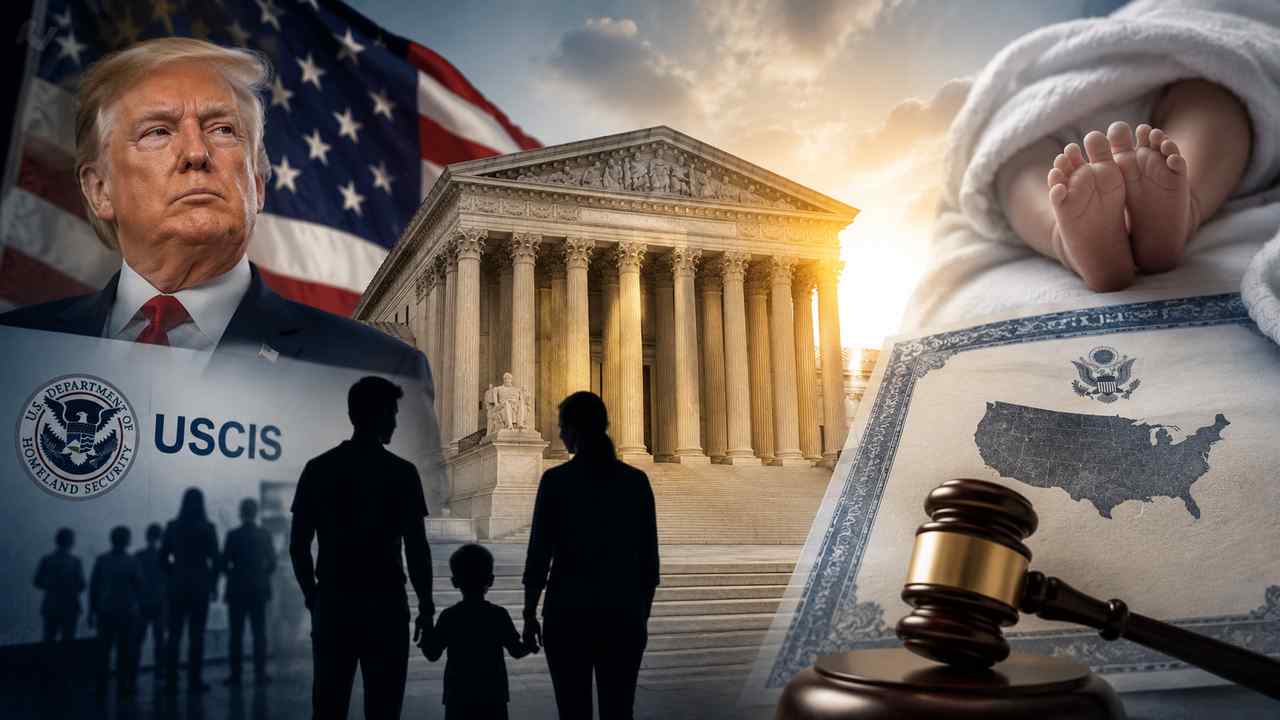
A growing legal fight over who qualifies for automatic U.S. citizenship is now heading to the nation’s highest court, putting immigration policy back at the center of a heated national debate. The case could shape how citizenship rules are interpreted for years to come.
The U.S. Supreme Court is preparing to review challenges tied to birthright citizenship policies pushed during the Trump era, while U.S. Citizenship and Immigration Services has quietly adjusted parts of its immigration guidance in response to ongoing legal uncertainty. Immigration attorneys say families across the country are closely watching what happens next.
For many immigrants, visa holders, and mixed-status households, the battle is about more than politics. It raises a deeply personal question: who gets recognized as American at birth — and whether long-standing constitutional protections could face a major new test.
Supreme Court Agrees to Hear Major Citizenship Case
For more than 150 years, birthright citizenship in the United States has largely been treated as settled law. Now, that long-standing guarantee is facing fresh scrutiny as the U.S. Supreme Court steps into a legal fight connected to policies championed by Donald Trump.
At the same time, U.S. Citizenship and Immigration Services has started adjusting parts of its immigration guidance as officials prepare for possible legal and administrative ripple effects. The overlapping developments are creating new anxiety for immigrant families, temporary visa holders, and parents awaiting immigration decisions.
What makes this case especially powerful is the uncertainty surrounding it. For millions of families, the debate is no longer just about constitutional language or politics in Washington, it is about the future legal status of children born in America and what changes could come next.
What Exactly Is Birthright Citizenship?
Under the 14th Amendment, most children born on U.S. soil automatically become American citizens at birth — a principle that has guided U.S. immigration law for more than a century. The rule applies regardless of a family’s immigration status, with only a few limited exceptions such as foreign diplomats.
Supporters say the policy reflects a core constitutional promise and helps prevent generations of people from being left without legal status. Critics, however, argue the amendment has been interpreted too broadly over the years and should apply more narrowly.
That disagreement is now at the heart of the Supreme Court battle, turning a long-standing constitutional protection into one of the biggest immigration flashpoints in the country.
USCIS Begins Adjusting Immigration Guidance
While the Supreme Court prepares to hear the case, U.S. Citizenship and Immigration Services has already started making internal policy adjustments that immigration lawyers say could affect how certain applications are reviewed in the future.
According to legal observers, the agency is increasing scrutiny in some areas while preparing for possible changes tied to citizenship and family-based immigration policies. The updates are not a full rewrite of existing rules, but they are raising fresh concerns among immigrant communities.
Areas Families and Applicants Are Watching Closely:
Additional documentation requests in some immigration filings
Closer review of family-based immigration cases
Growing uncertainty for mixed-status households
Possible future impact on children born to temporary visa holders
Delays and confusion surrounding long-pending applications
Global Briefing
Get the week's most critical immigration news and policy analysis directly in your inbox.
Immigration attorneys say many families are now seeking legal guidance early, worried that future court rulings could eventually influence how federal agencies handle citizenship-related cases moving forward.
Immigration Advocates and Legal Experts Sound Alarm
The Supreme Court case is already triggering strong reactions from immigration groups, constitutional scholars, and policy experts across the country. Many advocates warn that even the possibility of limiting birthright citizenship is creating fear and confusion inside immigrant communities.
Several immigrant-rights organizations argue that changing the current interpretation of the 14th Amendment could open the door to lengthy legal battles over citizenship status, identity documents, and federal benefits. Some attorneys say families are increasingly asking whether future policy changes could affect children born in the United States.
Supporters of stricter immigration policies see the case differently. Conservative legal analysts argue the court now has an opportunity to revisit what they describe as an overly broad interpretation of citizenship protections and clarify how the Constitution should be applied in modern immigration cases.
What Could Happen if the Court Changes the Rules?
For now, birthright citizenship remains fully in place across the United States. But if the Supreme Court narrows the current interpretation, the impact could stretch far beyond immigration paperwork.
Legal experts say any major change could affect:
Children born to undocumented immigrants
Families living in the U.S. on temporary visas
Mixed-status households with pending immigration cases
State agencies responsible for birth records and identification documents
Immigration attorneys also warn that even if the court sides with stricter limits, implementation would likely face additional lawsuits and years of legal challenges. Still, the uncertainty alone is already leaving many families anxious about what comes next.
What Happens Next?
The Supreme Court is expected to hear arguments in the coming months, with immigration attorneys and advocacy groups closely tracking every development. A final ruling could arrive later in the court term and may ultimately reshape how citizenship laws are interpreted nationwide.
Until then, current birthright citizenship protections remain unchanged, meaning children born in the United States still automatically receive citizenship under existing law. However, the growing legal battle is already creating uncertainty for many immigrant families trying to plan their future.
Immigration experts say the case will likely become one of the most closely watched legal fights of the year, especially as federal agencies and policymakers prepare for the possibility of major immigration policy changes.
Final Take
As the Supreme Court prepares to weigh one of the most sensitive immigration questions in decades, the debate over birthright citizenship is moving far beyond politics and into the lives of millions of families. What was once considered a settled constitutional protection is now facing renewed legal scrutiny at the highest level.
For immigrant communities, visa holders, and mixed-status households, the uncertainty is already real. While no immediate changes have taken effect, the outcome of the case could influence future immigration policy, citizenship rules, and how federal agencies handle family-based cases for years to come.
With national attention now fixed on the court, many families are left waiting for answers and watching closely to see how the next chapter of America’s immigration debate unfolds.