
Logo
search
homeHome Live Updates

Follow Us

â—Ź6 min read

USCIS Tightens Filing Rules After DHS Approves Invalid Signature Crackdown

U.S. Citizenship and Immigration Services is moving to tighten filing standards after new DHS-approved guidance expanded scrutiny on invalid and missing signatures. The change could lead to more rejected immigration applications if forms are not completed correctly.

A
Allen
MAY 13, 2026 at 2:28 PM UTC
📍United States
USCIS Tightens Filing Rules After DHS Approves Invalid Signature Crackdown
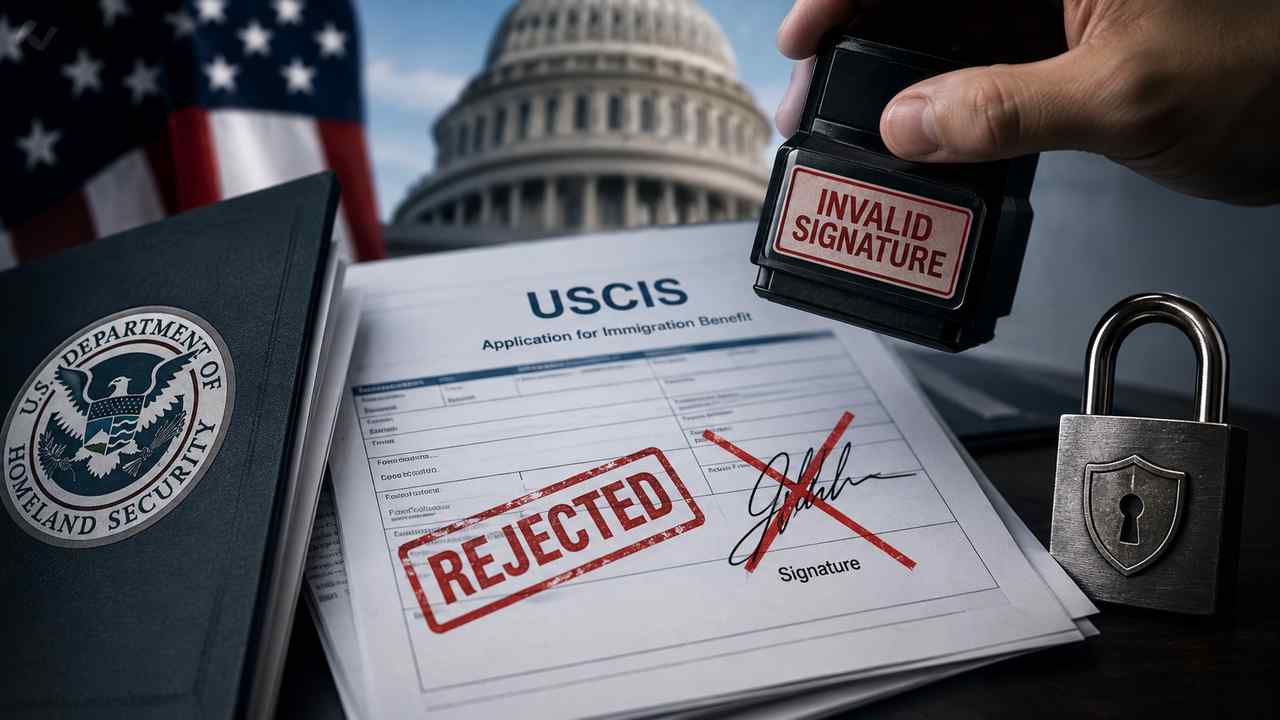
USCIS filing documents displayed alongside a signature section as the agency increases scrutiny on invalid signatures and incomplete applications.

The U.S. immigration system is entering a stricter compliance era after the Department of Homeland Security approved a major crackdown targeting invalid signatures on immigration filings, a move that could lead to faster application denials and rejections for thousands of immigrants nationwide.

U.S. Citizenship and Immigration Services (USCIS) is now warning applicants that missing, mismatched, copied, or improperly submitted signatures may trigger immediate action against applications, with fewer opportunities to correct mistakes after filing.

The tougher enforcement policy is already raising concerns among immigration attorneys and advocacy groups, who say even small technical errors could now create serious delays for people seeking green cards, work permits, asylum protections, or U.S. citizenship benefits.

What Changed in the USCIS Filing Policy?

Under the updated approach, USCIS officers are being directed to apply stricter review standards when examining signatures on forms and supporting documents.

Previously, applicants sometimes received Requests for Evidence (RFEs) or notices allowing them to correct signature mistakes. But under the new crackdown, USCIS appears increasingly willing to reject or deny applications immediately if signatures are considered invalid or incomplete.

The agency says the changes are designed to strengthen filing integrity and reduce fraud across the immigration system. USCIS has emphasized that every immigration form must contain a valid signature that complies with official filing rules. This applies to both paper filings and certain electronic submissions.

Types of Signature Errors Under Scrutiny

Immigration attorneys say USCIS officers are now paying closer attention to a wide range of signature-related issues, including:

  • Missing signatures

  • Incorrectly placed signatures

  • Signature mismatches between documents

  • Copied or scanned signatures where originals are required

  • Improper electronic signatures

  • Unsigned supplemental forms included in larger application packets

Even a single missing signature in a multi-form package could reportedly create problems for the entire filing. Lawyers warn that applicants should not assume small clerical mistakes will automatically receive correction opportunities moving forward.

Why USCIS Says the Crackdown Is Necessary

Federal officials say the stricter standards are part of broader DHS efforts to improve fraud prevention, strengthen identity verification, and modernize immigration processing procedures.

USCIS has also faced mounting pressure to manage heavy application backlogs while ensuring filings meet legal and procedural requirements before entering the review pipeline.

By tightening signature verification rules, the agency says it can reduce incomplete submissions and improve overall processing efficiency. The move also aligns with broader immigration enforcement priorities focused on compliance, documentation accuracy, and applicant accountability.

Immigration Attorneys Warn of Growing Risks

Immigration lawyers across the country say the policy could have significant real-world consequences for applicants already navigating a highly complex immigration system.

A rejection or denial caused by a technical signature issue may force immigrants to restart the filing process entirely, potentially losing valuable processing time and paying new filing fees.

“This may sound like a paperwork issue, but it can have life-changing consequences,” one immigration attorney said. “A rejected filing can affect work authorization, legal status timelines, or even travel plans.”

Attorneys are especially concerned about immigrants facing deadline-sensitive applications, including work permit renewals and humanitarian protections tied to filing dates.

Applications Most Likely to Be Affected

Legal experts say several major immigration categories could face increased scrutiny under the new enforcement approach, including:

  • Green card applications

  • Employment authorization renewals

  • Family sponsorship petitions

  • Adjustment of status filings

  • Asylum applications

  • Humanitarian benefit requests

Large family-based application packets involving multiple applicants may also carry higher risks if one required signature is missing or incorrectly completed.

Fewer Chances to Correct Filing Mistakes

One of the biggest concerns surrounding the crackdown is the growing perception that USCIS is becoming less flexible when handling technical filing errors.

In previous years, applicants were often given opportunities to correct missing information through RFEs or rejection notices. But attorneys say immediate intake-level denials are becoming more common as USCIS adopts stricter compliance standards.

The agency has also made clear that applicants themselves remain responsible for ensuring all forms are properly completed before submission — even when using attorneys, preparers, or filing services.

Advocacy Groups Raise Concerns

Immigration advocacy organizations warn that vulnerable applicants may be disproportionately affected by the tougher filing rules.

Non-English speakers, elderly immigrants, asylum seekers, and self-filed applicants could face greater difficulty understanding complex signature requirements and evolving procedural standards.

Critics argue that minor technical mistakes should not prevent otherwise eligible immigrants from accessing lawful immigration benefits.

Some advocates also fear that rejected filings tied to signature issues could cause applicants to miss critical filing windows tied to lawful presence or employment authorization.

What Applicants Should Do Now

Immigration attorneys are urging applicants to carefully review every page of their filings before submission.

Experts recommend taking several precautionary steps, including:

  • Double-check every signature field

  • Use the latest USCIS form versions

  • Follow official electronic signature instructions carefully

  • Verify dates across all forms and supporting documents

  • Ensure all co-applicants and dependents sign where required

  • Keep complete copies of all submitted paperwork

Lawyers also recommend allowing extra review time before mailing applications to avoid preventable mistakes.

What This Means for Immigrants

The DHS-approved crackdown signals that technical filing compliance is becoming increasingly important within the U.S. immigration system.

For applicants, even a seemingly minor signature issue could now lead to delays, extra expenses, or lost processing time.

The message from USCIS is becoming clear: precision matters more than ever.

Final Take

USCIS’s tougher stance on invalid signatures reflects a broader push toward stricter immigration filing standards nationwide.

While federal officials argue the changes will strengthen system integrity and reduce fraud, immigration attorneys warn the policy could create serious challenges for applicants already dealing with a complicated process.


Next Article
â—Ź6 min read

Explained: The Economic Chilling Effect of Trump’s Immigration Crackdown

Economists and business groups say stricter immigration enforcement measures are creating uncertainty across industries that rely heavily on immigrant labor. Employers, workers, and local economies are already beginning to feel the pressure.

C
Camila
MAY 13, 2026 at 2:53 PM UTC
📍United States
Explained: The Economic Chilling Effect of Trump’s Immigration Crackdown
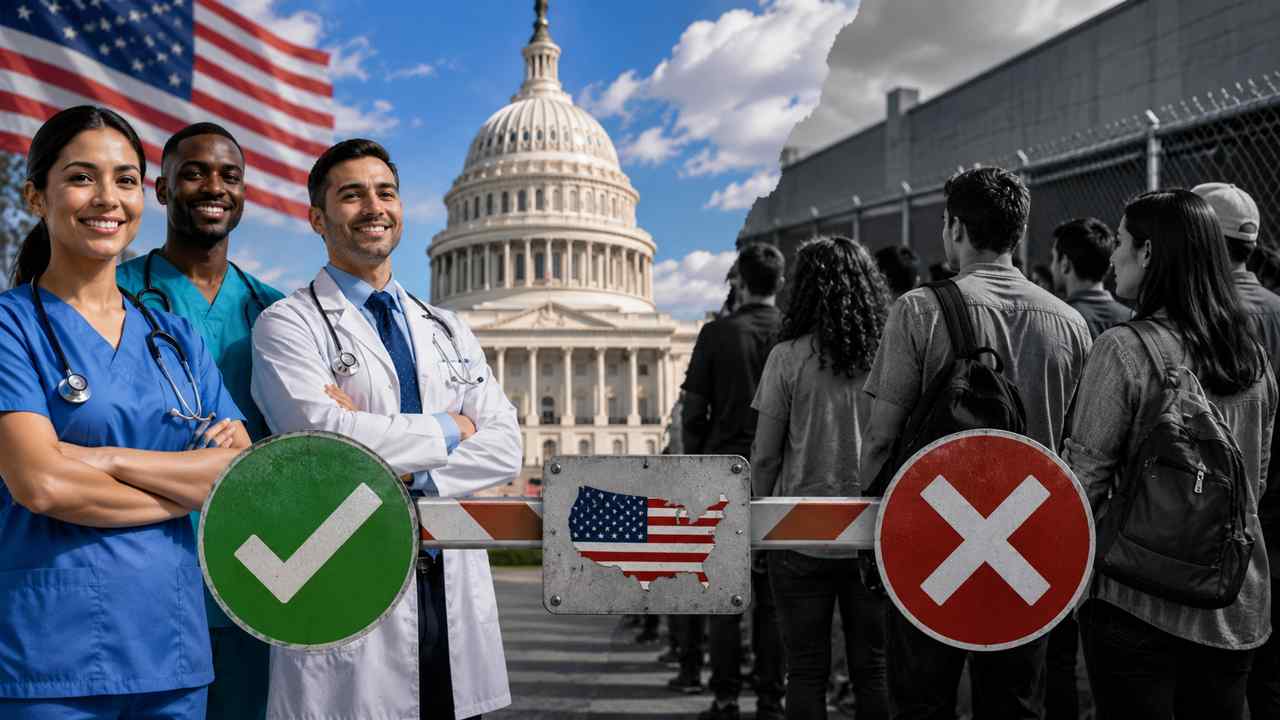
Businesses and immigrant workers face growing uncertainty amid tougher immigration enforcement policies.

As the Trump administration ramps up immigration enforcement efforts again, the effects are beginning to stretch far beyond the border debate. In cities, farms, restaurants, and construction sites across the U.S., many workers and business owners are quietly bracing for uncertainty.

Economists say the biggest concern may not be deportation numbers alone, but the growing fear surrounding stricter policies. When people become afraid to travel, shop, work, or even show up for jobs, entire local economies can start to slow down in subtle but noticeable ways.

That growing hesitation often called an “economic chilling effect”, is now becoming part of a wider conversation about how immigration crackdowns could reshape the American workforce, consumer spending, and small business activity in the months ahead.

What Does the “Economic Chilling Effect” Actually Mean?

The phrase may sound technical, but the idea behind it is simple: when fear and uncertainty spread through immigrant communities, economic activity often slows down too. People become more cautious about where they go, how they spend money, and even whether they should continue working in public-facing jobs.

In many areas, immigration enforcement concerns can influence everyday decisions long before any official action happens. Some workers avoid crowded workplaces, parents skip local events, and families cut back on shopping or travel because they fear attracting attention.

Here’s how that ripple effect can show up:

  • Workers staying home or leaving jobs suddenly

  • Small businesses seeing fewer customers walk in

  • Families delaying major purchases or rent moves

  • Employers struggling to fill labor-heavy positions

  • Communities becoming quieter economically despite stable demand

For economists, this matters because consumer confidence plays a major role in keeping local economies active. Even temporary uncertainty can affect hiring, spending habits, and business growth, especially in industries that rely heavily on immigrant labor.

Industries Most Likely to Feel the Impact

The impact of tougher immigration policies is being watched closely in industries that depend heavily on immigrant workers. Agriculture, construction, restaurants, and hospitality businesses are among the sectors facing the biggest concerns right now.

In farming communities, even rumors of increased enforcement can make workers nervous about showing up consistently. That uncertainty can quickly affect harvesting schedules, deliveries, and labor availability during busy seasons.

Construction companies are also warning about possible worker shortages at a time when housing demand and infrastructure projects remain high. Some business owners say replacing experienced labor is neither fast nor inexpensive.

Restaurants, hotels, and warehouses could face similar pressure if staffing becomes unstable. For many employers, the concern is less about politics and more about keeping operations running without sudden disruptions.

Local Communities and Small Businesses Are Feeling It Too

The economic impact is not limited to large industries or national employers. In many immigrant-heavy neighborhoods, small businesses often feel the slowdown first as customers become more cautious about spending and travel.

Shop owners, food vendors, salon operators, and local grocery stores can see fewer people walking through the door during periods of heightened immigration anxiety. Even communities far from the border are beginning to notice shifts in everyday activity.

Some families are also cutting back on non-essential purchases and avoiding crowded public places altogether. Economists say that kind of hesitation, when repeated across thousands of households, can quietly weaken local economic momentum.

What Supporters of the Crackdown Are Saying

Supporters of tougher immigration enforcement argue by saying “the policies are designed to protect American jobs, strengthen border security, and reduce pressure on public resources”. The Trump administration has repeatedly said “stricter enforcement is necessary to restore order to the immigration system”.

Some conservatives also believe tighter controls could eventually raise wages in industries that rely heavily on low-cost labor. They argue businesses should invest more in hiring and training U.S.-born workers instead of depending on undocumented labor.

But economists studying recent enforcement patterns say the effects may be more complicated in practice. Research highlighted by NPR’s Planet Money found that deportation fears and ICE activity created what experts described as a “chilling effect” in local economies, reducing workforce participation and disrupting normal business activity in some communities. 

What Economists Are Watching Next

Economists raise a bigger question “how long this uncertainty could last and whether it begins affecting broader consumer confidence”. In labor-heavy industries, even small disruptions can create ripple effects that spread well beyond immigrant communities. 

There are also concerns that smaller local economies may recover more slowly if consumer confidence keeps weakening in immigrant communities. When families spend less and workers disappear from certain industries, the effects can spread well beyond immigration alone.

For now, analysts already warned saying that the economic impact is still developing, but many are closely watching workforce participation, inflation trends, and business hiring data. In many parts of the country, the fear surrounding enforcement may already be shaping economic behavior before policy changes fully take effect.

Final Take

The debate around immigration policy has long focused on border security and politics, but economists already said that “the conversation is increasingly shifting toward the economy as well. From hiring concerns to slower local spending, the effects are beginning to reach workplaces and communities far beyond Washington”.

For many businesses, the uncertainty itself may become the biggest challenge. When workers feel anxious, consumers pull back, and employers hesitate to expand, even strong local economies can start losing momentum quietly over time.

As the Trump administration moves forward with tougher immigration measures, economists, employers, and families alike will be watching closely to see whether these fears remain temporary or become a deeper economic reality across the country.

Next Article
Loading Next Story...
Reading:USCIS Tightens Filing Rules After DHS Approves Invalid Signature Crackdown
Article 1 of 4

g_translateSelect Language

Loading languages...